Societies must make the decision whether the opportunities lost by the vast majority of law-abiding people are worth denying opportunities to the very few criminals. Is the cure more damaging than the poison? Is a gun-free society forcing its will on those who want to own guns better or worse than a society in which criminals have slightly easier access to guns by stealing them from law-abiding owners?
I am perfectly happy to increase my probability of violent death from 1 in 100000 to 2 in 100000 if it means I also increase my probability of enjoying an annual Thanksgiving tradition with my family and community from 0% to 100%.
Edit: your reference appears to lump suicide and homicide together, which is not germane to a discussion about gun control. I'd wager that studies would find there's a correlation between owning over the counter or prescription medications and the risk of medication-induced death in the home.
Yea, the pros of sem-automatic rifle regulation has to be weighed against the extent of tragedies they enable. Do the pros of another firearm really out-weigh the pain they enable?
There are a LOT of semi-automatic rifles that aren't AR15s. There are semi-automatic shotguns, and semi-automatic pistols as well. Speaking objectively, most firearms bought today are semi-automatic. A semi-automatic weapon is inherently no more or less dangerous than any other gun in the hands of someone who knows how to use it.
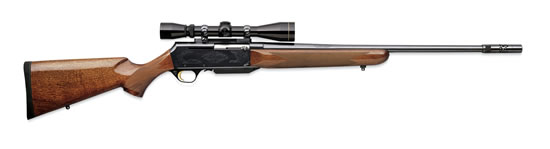
Just for clarity, and I don't mean to assume that you don't know, but as most people I've spoken with have it entirely wrong, a semi-automatic firearm means that when you pull the trigger, a bullet is fired. There is no 'burst' or 'spray' mode, and there's no tangible difference between an AR15 and, say, a Browning BAR (http://www.chuckhawks.com/browning_BAR.jpg), and "assault weapons bans", in my opinion, penalize a gun for looking like military weapons, when in reality they function nothing like military weapons (as they don't have burst, spray or fully automatic fire modes).
If they're famous for causing havoc recently, it almost certainly speaks more to their popularity than anything else. If the most popular car in the America were the Ford Taurus, it would likely be involved in more accidents than other cars, based on sheer math. The AR15 is the most popular rifle sold in America today. The reasons for its popularity are because of its modular design, not its lethality. With an AR15, I can replace the upper assembly without need of a gunsmith. This means I can have one "gun" for both long and short range shooting. I can 'bolt on' attachments like a scope, night lights, laser sights, bipods, etc., without having to pay somebody else to do it for me. It's popular today for the same reasons Linux is popular with nerds -- because you can tinker with it.
As for its lethality, it fires a small caliber, low-weight round (.223). In its generally short-barreled configuration (though again, that is moduler) it is considered a 'varmint' gun, used to kill raccoons, coyotes, wolves and the like from a ranch, or what have you. If people were choosing their killing weapons based on lethality, they would have chosen an AR10 (.308 round) or something like a Saiga 12, which is a magazine-fed shotgun.
I agree that it is disconcerting to see guns like an AR-15 being targeted merely because they look scary or military-like, but they do have a number of attributes that make them ideal for mass-shootings, which tend to occur at short-to-medium ranges.
They are smaller and lighter than many of the other guns you mentioned, they have minimal recoil, and while .223/5.56 rounds are small, they are still quite lethal at the ranges involved in mass shootings. The lighter rounds also mean that you can carry far more of them and it is easier to use extended magazines with them.
Compared to a handgun: Better range, more capacity, higher velocity.
Compared to a shotgun: Better range, more capacity.
Compared to an AR10/M14: More capacity, less recoil.
Also, compared to a lot of other guns, ARs in general have less general utility - they are poor for home/personal defense and you generally don't use them for hunting (other than various pests, usually). I will grant you that they are enjoyable guns to own and shoot, though.
I don't disagree in the slightest, if you consider the AR as it is traditionally packaged and sold. The AR though, like the Linux nerd-reference I made earlier, is more of a platform than a gun itself. I have seen ARs in 50 cal beowulf configurations, .300 whisper, etc. So, they can be used very effectively for hunting. A friend of mine has one that he uses for 'plinking' cans and targets, and by swapping the upper to .300, is able to effectively deer hunt with it.
As for home defense, that's very subjective. To me, the best weapon for home defense is the one that I can shoot the most easily. The AR is so loved because it IS easy to use. The first time I actually fired one was when I was volunteering at a disabled veterans charity range event. There were many veterans who had sustained injuries that prevented them from being able to handle regular rifles. Many of their guns were configured with forward grips in a variety of angles (depending on their ability to handle it), and found it to be an all around useful for utility.
Another aspect is that standard capacity magazines (20-30, depending on manufacturer) make them great for self defense in untrained hands. That they are "scary looking" doesn't hurt their ability to deter would-be attackers, but compared to the AR10, the .223 round does have substantially less 'stopping' power (I'll be happy to dispute the meaning of that in another venue, because while I agree that physics make it such that no bullet has stopping power, the ability to impair the target is a different issue altogether), and anecdotally, people I know that have used the AR in self defense or military situations generally attest that you double tap targets before they're considered neutralized. No such generality exists for .308 or 7.62NATO rounds.
Lastly, if my wife were the subject of a home invasion, the last thing in the world that I would want to happen to her is to run out of bullets and for the bad guys to know that. Joe Biden recently advised that in the event of a home invasion, you should own a shotgun and fire two warning blasts -- my contention in response to that is that 2 shots effectively empties most shotguns, and disarming yourself before an attacker has even moved seems silly. Add to that that in many areas discharging a firearm as such is a crime, and that will likely damage somebody else's property in urban environments.
As for the utility of it for home defense, that depends on many factors. I live out in the woods. It's a suburb, but I'm in a hilly area geographically, so I could fire a gun level in three directions and not have to worry about hitting anything other than ground. If I were in a denser city, I would almost certainly prefer a shotgun -- ideally something like a 12-round, magazine fed Saiga.
But as for the argument of ARs not having utility, I'd say that's only true if you never take it apart. Once you swap uppers, it becomes, effectively, a set of lincoln logs for you to do with whatever you like (and are allowed to do).
Those are fair arguments. The main reasons I think ARs are poor for home defense:
1) Their size makes them unwieldy in the home. My AR15, with the stock fully collapsed, is still 32" long, which makes it less than ideal for navigating around in a home.
2) The muzzle velocity and the fact that you typically don't have hollow point rounds laying around makes it highly likely that you are going to hit a lot of things you don't mean to. Even if you hit your target, there is still a high probability of overpenetration when you are talking about something that is going ~3000 fps.
I somewhat disagree with the fact that the 30 round magazine matters much - a decent handgun can contain 10 or more rounds, and if you haven't knocked down your target by that many shots, running out of ammo is going to be the least of your problems.
If I were concerned about home defense, I'd prefer either a shotgun (like you say, the Saiga would be a decent choice) or a 9mm pistol.
I don't disagree that overpenetration should be a concern for a lot of people. It isn't for me, so I like the AR15 for home defense. I've got a cabin that is even more remote, and comes replete with occasional threats from various wildlife, and I like it there too -- but that is with the knowledge that the nearest human being should be no closer than 50 acres away.
Regarding the ammo, for a small caliber weapon, and the accuracy of the average person who shoots, your odds of stopping an assailant with 10 rounds is pretty good, at about 85.1%. If there are multiple assailants though, 10 rounds doesn't provide particularly great odds - at 35%. 12 rounds gets you 50% odds against 2 assailants.
The main reason I argue against ammunition capacity restrictions for citizens though, is that generally speaking, criminals have the advantage of preparation in their crime, and aren't going to respect magazine limitations -- especially those of the more ludicrous nature like found in New York, where there is a 7 round limit. You can have a larger than 7 round magazine, but may only fill it with 7 rounds. No criminal preparing to engage in criminal activities is going to observe that restriction, while there may well be law abiding folks naive enough to obey such a law and find themselves out of ammunition when they need it.
Further, according to the Supreme Court, bans on arms "in common use" are effectively unconstitutional, and banning down to a 7 round capacity limit is a violation of that decision. As you said, there are numerous handguns containing 10 or more rounds, with Glocks generally fairing on the higher side of capacity, and older weapons like the 1911 being 7 or 8+1, but standard capacities are usually somewhere between 12 and 18 rounds on the most common of firearms. For the AR15, 20 rounds is the norm, and as such, should be protected.
Per Alan Gura (the attorney of record for DC v Heller and Chicago v McDonald), you can't make what is "in common use" a result of a restriction either, so that they can't ban all but five found magazines, then rule that as a result of that ban, a five round magazine is what's protected as common use.
"I don't disagree that overpenetration should be a concern for a lot of people."
Ok.
"It isn't for me, so I like the AR15 for home defense. I've got a cabin that is even more remote, and comes replete with occasional threats from various wildlife, and I like it there too -- but that is with the knowledge that the nearest human being should be no closer than 50 acres away."
Most victims of mass shootings aren't afforded that luxury.
"Regarding the ammo, for a small caliber weapon, and the accuracy of the average person who shoots, your odds of stopping an assailant with 10 rounds is pretty good, at about 85.1%. If there are multiple assailants though, 10 rounds doesn't provide particularly great odds - at 35%. 12 rounds gets you 50% odds against 2 assailants."
Exactly why mass shooters prefer high capacity weapons.
"Further, according to the Supreme Court, bans on arms "in common use" are effectively unconstitutional, and banning down to a 7 round capacity limit is a violation of that decision."
Free negros were also unconstitutional at one point. The constitution means nothing to me.
"I forgot to mention also that banning high capacity magazines is an extra-special futile endeavor since I can make them with a 3D printer."
People print counterfeit money too but we put measures in place to minimize it.
Lastly, fully-automatic firearms are heavily regulated in comparison to semi-automatic firearms and have only accounted for 2 homicides in the last 80 years. On the other hand, semi-automatic firearms have accounted for more than 3/4ths of mass shootings, of which 88 people died and 151 were injured in 2012 alone:
That's because 80% of all weapons manufactured today are semi-automatic. In similar news, most vehicular homicides are attributable to cars that have seat belts. Should we ban seat belts, or should we take a look at causality?
As for the criminals who engage in mass shooting, I think that we can agree that it's a disgusting, cowardly act, but we can't very well pass laws to prevent every crime someone might commit. As for "Exactly why mass shooters prefer high capacity weapons", that's not even necessarily true. The VA Tech shooter had 17 low-capacity magazines and just reloaded whenever he felt the need. Again though, per DC v Heller, standard capacity magazines are 'in common use' and 'for lawful purpose', which means that effectively, on Constitutionality, should not be bannable.
Regardless, of all the homicides that have been committed, the vast majority are perpetrated with handguns, not rifles of any sort, and nobody is moving to ban those in any way. Moves to ban guns based on their aesthetic features is, in my opinion, naive. Banning guns with "military style features" like barrel shrouds (that exist on every rifle made since 1880) or sliding stocks (which simply allow a gun to be shared by people of different stature) are akin to banning cars with racing stripes or bucket seats.
It's also pointing out that while mass shootings are indeed terrible, the citizenry in the United States has had access to the same type of weaponry since 1936, and these school shootings are a relatively recent phenomenon. The weapons themselves are certainly not to blame, so I believe we should look for other causes.
"Most victims of mass shootings aren't afforded that luxury."
Nor are they generally afforded the luxury of being armed themselves. Every mass shooting (except perhaps the Gabby Gifford shooting in Arizona) in the US since 1950 has been perpetrated in a "gun free zone" (not yet sure if Dormer counts), where the citizenry would be expected to be unarmed.
The Aurora, CO shooter for example, bypassed 6 theaters nearer to his home, including the largest theater in the area, and instead effected his spree at the one theater that enforced a gun free zone. Virginia Tech, Newtown, Columbine, Fort Hood, etc. The elimination of gun free zones may prove effective at deterring mass shooting. Despite the President's scoffing at the NRA's suggestion to put armed guards in school, he has effected that very policy through executive order, so perhaps that will mitigate shootings as well. Others have suggested that we investigate the link between mass shooters and prescription medication, but I can't speak intelligently on the subject myself.
"People print counterfeit money too but we put measures in place to minimize it."
So, perhaps I didn't make that remark with the care that I should have, but nobody is seeking (except perhaps California) to ban the possession of magazines, but the sale and import of those magazines into the state. Using my home state of MD as an example, I am not allowed to buy 30 round magazines here, and similarly, nobody here is allowed to sell them to me. But I can cross state lines to Pennsylvania or Virginia (which is no more than 20 minutes in either direction) and buy them and bring them back in without violating any laws whatsoever. Moreover, I can buy magazine "parts kits" from anyone I choose, on the internet or even in state, and then I just have to assemble them, which is a fairly trivial endeavor.
That there are also federal provisions that allow me to manufacture my own weaponry for personal use would mean that banning the sale of high capacity magazines would be particularly ineffective for too many reasons. 1) There are literally millions of them already in existence in the United States, 2) anybody can download a template and print them off in a 3D printer, 3) Criminals planning to commit crimes like mass murder are almost certainly going to ignore any such statutes, 4) Limiting capacities to 10 or below hasn't proven to be effective in reducing the body count even in cases where the criminals chose to use them and of course 5) It would almost certainly be an unconstitutional provision based on recent case law precedent.
Edit: Note, I made this reply before you edited to add your rhetoric about negroes, "Free negros were also unconstitutional at one point. The constitution means nothing to me."
In hindsight, it makes me wish I hadn't bothered to respond at all. Kudos for having wasted a good deal of my time.
If your whole argument rests on the words of a constitution, I don't know what to tell you. I still stand by my argument and have provided several sources in doing so.
If you would summarize that as the gist of my argument, then you clearly did not read it. That portions of my argument rest on the precedence of case law, is appropriate. Legal decisions in this country are generally decided on exactly that, and not the half-cocked rhetoric you put forth.
For what it's worth, I could put forth statistics that show that guns are used to deter crime at a rate of 80 times the rate with which they are used to commit crime. I could put forth statistics of how many lives were saved the by presence of a firearm. I can show other factors that would mitigate gun crime far and above the proposed legislation.
If we're really going to ignore the Constitution though, why would we ban rifles at all, when the sweeping majority of gun crime is done using handguns? Why not ban those? If we're trying to save lives, then why look at guns at all? Why not ban alcohol, or automobiles, or things that contribute to heart disease (the leading cause of death in the US), or foods contributing to Diabetes, or poisonous toxins. All of these contribute to more deaths than guns. In 2011, more deaths were attributable to blunt objects than rifles - should be ban heavy things?
I did read it. Ultimately, you have to look at the purpose of certain tools and their net effect on society. I respect the debate and will leave you with these last few resources:
I have looked at exactly that. The rate at which guns are used lawfully far outstrips the number of times they are not. As such, their benefit to society is easily a net positive.
That crazy people might misuse them is statistically no more reason to outlaw guns than it is to outlaw hammers or baseball bats.
All that said, I'll end this debate as you obviously aren't in any position to prove your assertions and are happy to sit in the umbrella that "Guns are bad, mmkay?" If you'd like to actually debate the position, I'd be happy to, but thus far you haven't indicated to me that you're capable.
Edit: Actually, I take that back. I have no desire to engage in a discussion with someone who has admitted they don't care about law while simultaneously advocating that the law be used to curtail a Constitutionally enumerated right.
"I have looked at exactly that. The rate at which guns are used lawfully far outstrips the number of times they are not. As such, their benefit to society is easily a net positive."
We won't get anywhere if the debates continue to rely on shocking stories, sweeping positive firearm events under the rug, and emotionally laden rhetoric instead of conducting a rational analysis.