I just want to say as an American, I am so fed up with all these gun stories. I understand there is debate about gun control and this and that, but we are having a much larger cultural problem here. The attitude of helping your neighbor or even someone less fortunate is slowly disappearing and being replaced by a fear for protecting what we have, as if someone else is after it. In my mind it's cyclical, if we help those in need, they really won't be after what we are trying to protect. As for the random gun violence, its enough already.
Being born and raised in Flint, and the victim of gun violence (father was murdered outside his work for 20+years over <$600) I always tell people Flint might be the murder capital of the world, but we aren't the random murder capitol of the world. For whatever its worth, its true.
Seriously. Just like that "Bitter Pill" story in Time a day or two ago highlighted that insurance is a red herring for the deeper problem of profit-driven costs in US health care, the issue of gun control is a red herring for a deeper cultural problem. Like you said people are becoming more fearful and more selfish. Combine that with a culture that glorifies violence and the insane media circus that pops up whenever anybody puts the words "school" and "shooter" together, you get an excellent, self-perpetuating environment for fomenting violence of any kind. Delusional people who can't get mental health care and who want to send a message will find a way to do that no matter what's banned or how Orwellian our society gets.
Weird that we have we're getting more fearful and selfish, and more and more violent, and yet violent crime is going down. (Weird how these finger in the wind takes of the zeitgeist work...)
You can thank the media for that. Its not that the violence is increasing. As you say, it is the opposite in fact. But the amount we HEAR about violence is skyrocketing.
So everyone, do yourselves a favor; STOP WATCHING THE NEWS! Stop reading it! It doesn't benefit you. Take it from a recovering news junkie. You won't miss it. You won't feel less informed. The important stuff will always make it to your eyes and ears. The rest is just going to make you more anxious than you reasonably need to be.
And not only that, but the media by glorifying anti-hero school-gunman or batman-shooting types also encourages this stuff by turning national attention on these loonies, making the next one want to do it even more.
The most hypocritical part is the media will turn around and talk all day about gun control, violent video games, etc etc when they themselves are the biggest problem.
I already follow your advice. I never read that stuff. Sometimes I go to Google News, and all I see is Murder, Rape, Shooting etc. Do you really think that's the "news" I'm looking for? Someone please start a news site startup that allows for custom filtering or something.
This is incredibly good advice, especially if you find yourself in an unexplainable funk with no real source. It's amazing how much of that feeling is drivien by the barrage of negativity pumped through your cable TV.
I stopped watching the news several years ago and have been better off. I recently turned it back on to watch the coverage of Newtown because guns are an important issue to me, and it was a shock - the deafening, negative stupidity blaring out of every conceivable pit was overwhelming after years of only reading news, and doing so selectively.
If you watch a lot of news, especially cable news, give it a try. Just for a month. See if you don't feel better about everything.
I have always wondered if crimes are getting more violent or if the amount of coverage we give the violent ones has increased. The closest I will get to the news is the Daily Show, because at least they poke fun at the American media for how ridiculous they can be.
The "Daily Show" is an interesting phenomenon because it's like, we're still going to feed you the corporate 24-hour news garbage, but we're going to do it satirically so that you can feel superior to all the plebes who watch this stuff "for reals".
It's also interesting that it appears to be taking itself more and more seriously as time goes by. It's a modern day ministry of propaganda. To what end, I have no idea.
I've started to view the random gun arguments as a sort of social software crash. I'm personally pretty indifferent to most of the arguments for and against, but it seems impossible to mention guns online without having a mud-slinging match. And I do mean mud-slinging. There is no attempt to reason, it's all about getting angry and calling people names on the internet. And while the argument is going on, ordinary discussion can't function. It's like a kind of spinlock or an epileptic seizure; the only cure is to wait for the participants to burn out, and maybe start a new thread elsewhere.
"I just want to say as an American, I am so fed up with all these gun stories."
Me too. But it won't end soon.
Currently every shooting in every city is a candidate for promotion to a national media campaign that is focused on gaining additional restrictions on firearms, especially at the federal level (but also state level: Colorado is at this moment passing new highly-restrictive state firearms laws).
Every opportunity to alarm the citizenry about firearms, every chance to get parents' blood-pressure up with false or real reports of gunmen afoot will be invoked by the media. It's both good for their business and it's good for their political agenda.
In essence, this is an orchestrated attempt to use the Newtown shootings and the subsequent heightened public sensitivity as leverage to advance a long-present liberal goal to register and confiscate all firearms.
No. As a society, we became numb to gun violence to the point where the media stopped reporting it on the news. The Newtown shootings reminded us that the problem is real and pervasive enough that it demands a solution. Stories of gun violence are rightly reassuming a place at the top of the hour because of the horrible, devastating tragedies that they are.
This isn't about a liberal agenda in conflict with a conservative conspiracy. I fully believe in and support the 2nd amendment, and strongly feel that any new legislation must comply with it. But this right comes with responsibility. You don't get to shoot through your door because someone turned the knob without ringing your doorbell and hide behind it being an act of self-defense. You don't get to prove your bravery by firing into a group of innocent students from a rival high school. You don't take psychologically troubled individuals to the firing range for therapy and teach them to be efficient killing machines. And if you own guns, you don't leave them on the kitchen table so your seven-year-old can grab it on his way to school for show-and-tell.
This isn't political. We need to shame the idiots who abuse their rights to the detriment of the rights of others. We need to express a sense of outrage when this happens, loud enough for our families and friends to hear it. If that means a continuous stream of these stories on the news, stories of actual life-changing events, is what it takes, then so be it. It's about time the media did its job and reported real news instead of tie-ins to the latest blockbuster the parent company just released.
I expect the people you're referring to are anything but average pro-gun advocates. I (a staunch pro-gun advocate) interact with a lot of gun owners and "pro gun people". And I can say that the vast majority are calm, reasonable, level-headed and logical. Certainly as much so, if not more so, than the rabid anti-gunners. They also tend to be better informed in my experience.
Are there some really kooky people out there on the pro-gun side? Yeah, and a lot of them are very vocal about their weird conspiracy theories, their racist tendencies, etc. But those people are hardly representative of gun owners in general.
I think this is the thing that really makes me hate the media coverage of all this. When I talk to individual gun owners, they're talking about statistics and how the "assault weapons ban" is just a prohibition on cosmetically scary looking guns, etc. But you watch The Daily Show or any given broadcast from anyone with a nominally anti-gun slant and you would think they're all militia members who patrol the border looking for "illegal Mexicans" and need their personal stockpile of three hundred and seven firearms in case Obama "suspends the Patriot Act" to declare martial law.
Can't agree more. I'm "pro gun" and I own none. Just because I don't exercise a right doesn't mean I want others to diminish it or take it away. And yes some folks are creepy and kooky and unfortunately they are vocal about their guns so people use the label of kooky/crazy for folks that are vocally pro gun which is some sort of logical flaw.
" You don't get to shoot through your door because someone turned the knob without ringing your doorbell and hide behind it being an act of self-defense. You don't get to prove your bravery by firing into a group of innocent students from a rival high school. You don't take psychologically troubled individuals to the firing range for therapy and teach them to be efficient killing machines. And if you own guns, you don't leave them on the kitchen table so your seven-year-old can grab it on his way to school for show-and-tell."
Each case you list includes multiple violations of existing laws. How would more laws reduce the likelihood of re-occurrence?
"This isn't political."
Nonsense, this is the purest of politics: this is literally and figuratively about power and who will hold it.
It's not like it's a hidden conspiracy. Gun control activists have explicitly stated that they need to take advantage of the emotion following the shootings to push their agenda. And yes, the goal of many of them (including the author of the assault weapons ban currently proposed) is confiscation. She said it herself.
Yeah it's totally irrational to seek the most obvious way to prevent recurrence of the shooting massacre of 20 children, which happens with a marked regularity. Only a New World Order could explain why people want to ban guns.
The snark is unnecessary. Gun control advocates have had these goals for decades - long before Newtown - and openly speak about them. There is no tinfoil hat, no new world order. Just a political agenda by a minority of the political spectrum that uses tragedy to their advantage without apology.
That still doesnt make any sense. It's like say in nuclear energy. There are two camps: one side says it is safe the other says it isn't. However, if evidence of more and more nuclear tragedies accumulate, one side looks more and more correct than the other. That side isn't "using" a nuclear tragedy to "further their own agenda", they are simply using it to demonstrate they are correct.
I'm just responding to the claims that there is an orchestrated attempt to use Newtown emotion to further gun control and confiscation. There undeniably is, and it's not some crazy notion of the tinfoil hat crowd - but the admitted and public goals of some people in power.
They have stated that they need to act now or they will lose the emotion required to pass such laws. That is not demonstrating that they are correct - it's the equivalent of "act before we have time to calm down and think, because we know we are in the minority on this."
Absolutely true. They use propaganda and emption as much as the anti gun crowd.
But that link is way off base. The NRA is as pure a grass roots organization as exists in American politics. The gun industry is tiny. The NRA's lobbying budget is no where near the top of the list of political spenders. But they have roughly 4 million members (give or take - it grows in times of need) who are extremely passionate. They open their wallets, they vote, they organize, and they have an uncanny political memory. They terrify politicians (as the citizens should) because they are a well organized, focused group of single issue voters without party affiliation.
When someone from the NRA sends a letter saying "don't vote for this or I won't vote for you" it really means something. They're not like the suburban housewife who demands that politicians "do something about guns" and then forgets about it a month later.
That is where the NRA gets it's power. The gun industry and their money is peanuts.
The media does tend to sensationalize it, and yes certain people in government exploit it for personal gain.
I look at it this way, just be glad they can sensationalize it, the alternative would be that this is so routine it doesn't make people think.
America does not have a gun problem; it has a cultural problem that many refuse to recognize. The look to ban the tool employed by this culture but not to find how to end this culture. Ever listen to the music on the streets? Ever listen to the talk in a down town truly urban mall area?
We spend more time coddling and telling them its not their fault than focusing on getting them productive and responsible. People who are told over and over they are not responsible tend to become just that.
"Orchestrated" may be too strong a word; it's like there is emergent, independent behavior from a large minority of people who share the same views and all saw the same opportunity.
It's not a conspiracy. It is the stated goal of politicians who are currently in office. I think the strong language of the parent is throwing you off what he actually said.
True, there was no national dialogue on guns until the Democratic Party-controlled press fabricated one. The Newton shooting was going to be another crime story to be largely forgotten in a month except that the Democratic press made it the top headline of every party-run newspaper for over a week. (Meanwhile, where the hell are the news articles about Benghazi and the second September 11 attacks? Our "nearly defeated" wartime enemy launches simultaneous attacks on dozens of US facilities around the world, with tens of thousands of fresh recruits, and there is NO news coverage? WTF?) It is a classic "pseudo-event" as Boorstin called them, or in common parlance, a fake news story. It is obvious that the Democrats are using their near-monopoly power over the media to create the image of a public frenzy where there was none, for the purpose of raising enough public support through the bandwagon effect to shoot another hole in the Constitution. They are doing this partly by slandering the Constitution's supporters as "gun nuts" and potential murderers. Imagine if the political cartoons in your newspaper regularly portrayed EFF and online free-speech activists as child rapists, kidnappers in bondage gear dragging screaming little girls away, because a few people use Tor and Linux for trading kiddy porn. That is how the Democratic Party is depicting anyone who believes in the Constitution and the orderly process of law whether they are gun owners or not.
This is not intended to be a partisan statement. I am a Democrat. I am also able to see what my party is doing, and I don't like it. This also has nothing to do with Obama; the pressure is coming from the party machine, not the White House. Obama is doing nothing significant, proposing minor regulatory changes that stay within the bounds of the Constitution, while giving the appearance of doing something to appease the party's desire for action.
Yeah dude the gun slaughter of 20 children in an elementary school wasn't even going to make national news until "the Democrats" and their "near-monopoly control of the media" got a hold of it. Good thing there are people like you who can pierce through the bullshit with the Eye of Truth.
I would like to suggest that gun control and healthcare are linked to the same cultural problem. To have a system where millions of people know that any disease they catch they simply will never afford to cure, and the rest of the country stands by and allows it to happen, comes from the same place as standing by while those self same people are shot by guns they can afford.
About a year ago, a student's umbrella was mistaken for an assault rifle at the university where I work and we were on lock down for hours. http://www.wral.com/news/local/story/10387437/
If guns are not the cause of violence and banning them isn't for the better, why is England a less violent place than America? The gun murder rate in England is 0.1 murders per 100,000 people, in America it's 3.2.
The problem America has is not exclusively caused by guns, it's a problem with culture too, but it seems strange to argue that connecting the high presence of guns to the high number of gun murders is "a spurious connection, made by lazy thinkers".
If guns are not the cause of violence and banning them isn't for the better, why is England a less violent place than America? The gun murder rate in England is 0.1 murders per 100,000 people, in America it's 3.2.
Oh god, stop comparing a huge ass country with states with lot of differing laws to a small european country!
A popular misconception is that England has just as much violent crime as America but it's redistributed across other weapons, the reality is that every country counts violent crime differently. If someone were to break into my apartment in England while I was out that is a counted as a violent crime, whereas in America it wouldn't be counted. The only fair way to compare countries is to compare specific crimes (eg: Murder, Robbery) comparing "Violent Crime" doesn't work.
For 2011/2012 there were 549 homicides in England[1], for the same period there was ~14,000 in the US[2]. The population of the UK is 62 million, the population of the US is 313 million. There are 6x more people in the US but 28x more homicides, most of which are firearm related. If you remove the firearm homicides from the America figures they become almost the same as the UK figures (in per 100,000 people).
How many lives do guns save? Do you actually know they save more then they cost?
Requiring nations without guns to be 'violence free', dismissing the intermediate 'significantly less violent', is an argument by a lazy or dishonest thinker that can only see black and white.
It's also interesting in this context that the allied forces disarmed people in Germany with the Treaty of Versailles. Hitler then armed the people in Germany again. You didn't even need a license for shotguns, rifles or ammunition.
Gun control doesn't necessarily have anything to do with dictatorship. Preventing a Coup d'état with a militia is just a pipe dream.
"Holders of annual hunting permits, government workers, and NSDAP (i.e., Nazi Party) members were no longer subject to gun ownership restrictions...
Jews were forbidden from the manufacturing or dealing of firearms and ammunition...Minister of the Interior, Wilhelm Frick, promulgated Regulations Against Jews' Possession of Weapons. This regulation effectively deprived Jews of the right to possess firearms or other weapons."
"Preventing a Coup d'état with a militia is just a pipe dream."
Yes, that would be why the United States is still part of the British Empire, right?
First of all, correlation is often not causation: you can't draw a causal link between the decline in violence and gun ownership. If you compare with other developed countries, it will be very clear that the U.S. has a lot more violence in general and violence using guns specifically.
Secondly, violence using guns requires the presence of guns, so it may be possible to establish a causal link between gun ownership and gun violence. Then, looking at statistics from developed countries, it becomes clear that the U.S. greater gun violence is directly related to greater gun ownership.
Delayed response on my part. There is less gun crime in the U.S. than 20 years ago despite there being more guns. That was my point, I should have come out and said it.
I'd be interested to know how Americans who live in countries with strict gun controls feel about not being able to carry a weapon? Do they feel any less safe?
I can say that when I was stationed in Germany that I felt safer.
I grew up around guns. I was a pretty good shot -- expert with the M16, M60.
But I own no guns now. I never will.
I simply don't understand how someone can feel safer around a loaded gun. It's a fallacy to think that because you've gone through training, or that you go to the range, or whatever, that you are better equipped to handle a weapon; it's akin to claiming that you are safer walking around with a lit stick of dynamite -- just because you have done it a lot.
Which leads to why I felt so much safer in Germany. It wasn't the idea that criminals didn't have guns, it was that every empty-headed fool didn't have one. The real problem is that I am subjected to every fool's second-ammendment rights. It's not just that they can blow their own head off with their foolishness, but that me and my family are also endangered by them.
Although they may be our family, friends and neighbors; although they may be good people; they endanger us through their "rights." I would much rather live in the "danger" of a place where only criminals, police and soldiers carry weapons than to live in the "safety" of a place where any fool with a pinch of paranoia who has watched too many action-adventure apocalyptic movies can play soldier.
Interestingly, I got "Access Denied" when I click that link in my primary browser. I can copy-paste the link into another browser and load this, so I think they're actually checking my User-Agent and blocking me because it is empty. Our beloved DHS.
I'll start by saying we do not have a gun problem in this country. We have a people problem. Speaking of people problems, I started reading these comments in hope of finding a different attitude than what I have been hearing around the topic of gun control lately. To me, HackerNews has usually been a place with more educated and informed comments but I didn't really find that here. I'm still finding misinformed people who have never fired a gun before, researched crime statistics or seriously thought about this issue making comments about how people "do not need to protect themselves"
I'm a gun owner, in fact I own many guns, I also carry a gun every single day. I'm also an honest and law abiding citizen. I have several years of defensive training with firearms and improvised weapons. I attend shooting matches and training schools with other law abiding gun owners nearly every weekend.
I can tell you that the vast majority of people who have a gun are good people and not the <1% of psychotic killers we have been seeing on the news lately.
I see some people here saying "There's some reason you have police, military, para-military and federal agencies so that citizens don't have to handle this aspect of security."
To me, this is a really misinformed comment. Does anyone here really believe that when your life is imminent danger that you are better off with a cell phone in your hand calling the police and waiting for them to arrive than you are with a gun in your hand using everything you possibly can to protect yourself and your family?
Does anyone here really believe that criminals follow laws? If a movie theater has a sign out side saying "This is a gun free zone, no guns allowed" do you really think that a psychopathic killer or angry criminal is going to turn around and go home because the sign said they can't bring a gun into that movie theater?
And does anyone really believe that criminals follow laws? Lets ban magazines that hold more than 7 rounds. Sounds like a great idea right? So that criminal that is planning to go kill some people today is going to wake up and decide that he is going to load his firearm to only the legal capacity. Or he is not going to go purchase a gun illegally, buy it off the street or steel it. Because that would be illegal and we all know that criminals follow laws...
So forget the constitution and the 2nd amendment for a moment, because I know people like to argue about what the Founding Fathers really meant by it. Do you really believe that we should not have the right to protect ourselves from active shooters, murderers, rapist and cold blooded killers with a highly affective tool just because a select few people have used that tool to do evil?
If guns didn't exist and everything else were the same and these evil people still had intent to do harm do you really believe that they would just give up because they had no other way to harm people? A gun is only a tool, just like a knife, a car, or a screw driver. All of which can do some serious harm to a person. Should we ban those things too?
I know some people are sheep and guns are not for everyone, they expect and hope that if they get put in a bad situation that the police will be there to save them. Just remember that it is NOT the job of the police to protect you. Their job is to uphold the law and to react to those breaking the law. It's fine if you personally want nothing to do with guns but that doesn't mean you have the right to tell others that they shouldn't be able to protect themselves.
So if you really want to make comments on how gun control should be and if people really need guns to protect themselves, please do some research first. I encourage you to look up how many guns that are purchased legally are actually used in a violent crime. Look at the crime rates of cities with strict gun laws and look at the data on the increase of gun purchases vs. the decrease in crime over the last few years. The FBI has some great statistics for this[1].
Here's a interesting video from a Sandy Hook father whose child was at Sandy Hook the day of the shooting and how he feels about guns: http://www.youtube.com/watch?v=dhXPlCjr0Vw
And does anyone really believe that criminals follow laws?
Criminals do not follow the law, that much is true, however a large amount of crime is due to opportunity and removing opportunity does help reduce crime.
If guns didn't exist and everything else were the same and these evil people
still had intent to do harm do you really believe that they would just give
up because they had no other way to harm people?
If this is true, then you're arguing that opportunity has absolutely nothing to do with crime. Adam Lanza for example, if everything had been the same in his life (mental illness, family problems) but he was born in England where he had no access to guns and wasn't brought up around guns would he have been able to do what he did in Sandy Hook somewhere in England?
The problem America has is not one gun control will solve, the problem America has is that guns are a part of American culture and the country is so saturated with guns that making them illegal will not make any difference to availability to anyone. Arguing that gun control is wrong for America seems fair but arguing that gun control is always wrong and that people will kill regardless of gun availability doesn't match reality.
Societies must make the decision whether the opportunities lost by the vast majority of law-abiding people are worth denying opportunities to the very few criminals. Is the cure more damaging than the poison? Is a gun-free society forcing its will on those who want to own guns better or worse than a society in which criminals have slightly easier access to guns by stealing them from law-abiding owners?
I am perfectly happy to increase my probability of violent death from 1 in 100000 to 2 in 100000 if it means I also increase my probability of enjoying an annual Thanksgiving tradition with my family and community from 0% to 100%.
Edit: your reference appears to lump suicide and homicide together, which is not germane to a discussion about gun control. I'd wager that studies would find there's a correlation between owning over the counter or prescription medications and the risk of medication-induced death in the home.
Yea, the pros of sem-automatic rifle regulation has to be weighed against the extent of tragedies they enable. Do the pros of another firearm really out-weigh the pain they enable?
There are a LOT of semi-automatic rifles that aren't AR15s. There are semi-automatic shotguns, and semi-automatic pistols as well. Speaking objectively, most firearms bought today are semi-automatic. A semi-automatic weapon is inherently no more or less dangerous than any other gun in the hands of someone who knows how to use it.
Just for clarity, and I don't mean to assume that you don't know, but as most people I've spoken with have it entirely wrong, a semi-automatic firearm means that when you pull the trigger, a bullet is fired. There is no 'burst' or 'spray' mode, and there's no tangible difference between an AR15 and, say, a Browning BAR (http://www.chuckhawks.com/browning_BAR.jpg), and "assault weapons bans", in my opinion, penalize a gun for looking like military weapons, when in reality they function nothing like military weapons (as they don't have burst, spray or fully automatic fire modes).
If they're famous for causing havoc recently, it almost certainly speaks more to their popularity than anything else. If the most popular car in the America were the Ford Taurus, it would likely be involved in more accidents than other cars, based on sheer math. The AR15 is the most popular rifle sold in America today. The reasons for its popularity are because of its modular design, not its lethality. With an AR15, I can replace the upper assembly without need of a gunsmith. This means I can have one "gun" for both long and short range shooting. I can 'bolt on' attachments like a scope, night lights, laser sights, bipods, etc., without having to pay somebody else to do it for me. It's popular today for the same reasons Linux is popular with nerds -- because you can tinker with it.
As for its lethality, it fires a small caliber, low-weight round (.223). In its generally short-barreled configuration (though again, that is moduler) it is considered a 'varmint' gun, used to kill raccoons, coyotes, wolves and the like from a ranch, or what have you. If people were choosing their killing weapons based on lethality, they would have chosen an AR10 (.308 round) or something like a Saiga 12, which is a magazine-fed shotgun.
I agree that it is disconcerting to see guns like an AR-15 being targeted merely because they look scary or military-like, but they do have a number of attributes that make them ideal for mass-shootings, which tend to occur at short-to-medium ranges.
They are smaller and lighter than many of the other guns you mentioned, they have minimal recoil, and while .223/5.56 rounds are small, they are still quite lethal at the ranges involved in mass shootings. The lighter rounds also mean that you can carry far more of them and it is easier to use extended magazines with them.
Compared to a handgun: Better range, more capacity, higher velocity.
Compared to a shotgun: Better range, more capacity.
Compared to an AR10/M14: More capacity, less recoil.
Also, compared to a lot of other guns, ARs in general have less general utility - they are poor for home/personal defense and you generally don't use them for hunting (other than various pests, usually). I will grant you that they are enjoyable guns to own and shoot, though.
I don't disagree in the slightest, if you consider the AR as it is traditionally packaged and sold. The AR though, like the Linux nerd-reference I made earlier, is more of a platform than a gun itself. I have seen ARs in 50 cal beowulf configurations, .300 whisper, etc. So, they can be used very effectively for hunting. A friend of mine has one that he uses for 'plinking' cans and targets, and by swapping the upper to .300, is able to effectively deer hunt with it.
As for home defense, that's very subjective. To me, the best weapon for home defense is the one that I can shoot the most easily. The AR is so loved because it IS easy to use. The first time I actually fired one was when I was volunteering at a disabled veterans charity range event. There were many veterans who had sustained injuries that prevented them from being able to handle regular rifles. Many of their guns were configured with forward grips in a variety of angles (depending on their ability to handle it), and found it to be an all around useful for utility.
Another aspect is that standard capacity magazines (20-30, depending on manufacturer) make them great for self defense in untrained hands. That they are "scary looking" doesn't hurt their ability to deter would-be attackers, but compared to the AR10, the .223 round does have substantially less 'stopping' power (I'll be happy to dispute the meaning of that in another venue, because while I agree that physics make it such that no bullet has stopping power, the ability to impair the target is a different issue altogether), and anecdotally, people I know that have used the AR in self defense or military situations generally attest that you double tap targets before they're considered neutralized. No such generality exists for .308 or 7.62NATO rounds.
Lastly, if my wife were the subject of a home invasion, the last thing in the world that I would want to happen to her is to run out of bullets and for the bad guys to know that. Joe Biden recently advised that in the event of a home invasion, you should own a shotgun and fire two warning blasts -- my contention in response to that is that 2 shots effectively empties most shotguns, and disarming yourself before an attacker has even moved seems silly. Add to that that in many areas discharging a firearm as such is a crime, and that will likely damage somebody else's property in urban environments.
As for the utility of it for home defense, that depends on many factors. I live out in the woods. It's a suburb, but I'm in a hilly area geographically, so I could fire a gun level in three directions and not have to worry about hitting anything other than ground. If I were in a denser city, I would almost certainly prefer a shotgun -- ideally something like a 12-round, magazine fed Saiga.
But as for the argument of ARs not having utility, I'd say that's only true if you never take it apart. Once you swap uppers, it becomes, effectively, a set of lincoln logs for you to do with whatever you like (and are allowed to do).
Those are fair arguments. The main reasons I think ARs are poor for home defense:
1) Their size makes them unwieldy in the home. My AR15, with the stock fully collapsed, is still 32" long, which makes it less than ideal for navigating around in a home.
2) The muzzle velocity and the fact that you typically don't have hollow point rounds laying around makes it highly likely that you are going to hit a lot of things you don't mean to. Even if you hit your target, there is still a high probability of overpenetration when you are talking about something that is going ~3000 fps.
I somewhat disagree with the fact that the 30 round magazine matters much - a decent handgun can contain 10 or more rounds, and if you haven't knocked down your target by that many shots, running out of ammo is going to be the least of your problems.
If I were concerned about home defense, I'd prefer either a shotgun (like you say, the Saiga would be a decent choice) or a 9mm pistol.
I don't disagree that overpenetration should be a concern for a lot of people. It isn't for me, so I like the AR15 for home defense. I've got a cabin that is even more remote, and comes replete with occasional threats from various wildlife, and I like it there too -- but that is with the knowledge that the nearest human being should be no closer than 50 acres away.
Regarding the ammo, for a small caliber weapon, and the accuracy of the average person who shoots, your odds of stopping an assailant with 10 rounds is pretty good, at about 85.1%. If there are multiple assailants though, 10 rounds doesn't provide particularly great odds - at 35%. 12 rounds gets you 50% odds against 2 assailants.
The main reason I argue against ammunition capacity restrictions for citizens though, is that generally speaking, criminals have the advantage of preparation in their crime, and aren't going to respect magazine limitations -- especially those of the more ludicrous nature like found in New York, where there is a 7 round limit. You can have a larger than 7 round magazine, but may only fill it with 7 rounds. No criminal preparing to engage in criminal activities is going to observe that restriction, while there may well be law abiding folks naive enough to obey such a law and find themselves out of ammunition when they need it.
Further, according to the Supreme Court, bans on arms "in common use" are effectively unconstitutional, and banning down to a 7 round capacity limit is a violation of that decision. As you said, there are numerous handguns containing 10 or more rounds, with Glocks generally fairing on the higher side of capacity, and older weapons like the 1911 being 7 or 8+1, but standard capacities are usually somewhere between 12 and 18 rounds on the most common of firearms. For the AR15, 20 rounds is the norm, and as such, should be protected.
Per Alan Gura (the attorney of record for DC v Heller and Chicago v McDonald), you can't make what is "in common use" a result of a restriction either, so that they can't ban all but five found magazines, then rule that as a result of that ban, a five round magazine is what's protected as common use.
"I don't disagree that overpenetration should be a concern for a lot of people."
Ok.
"It isn't for me, so I like the AR15 for home defense. I've got a cabin that is even more remote, and comes replete with occasional threats from various wildlife, and I like it there too -- but that is with the knowledge that the nearest human being should be no closer than 50 acres away."
Most victims of mass shootings aren't afforded that luxury.
"Regarding the ammo, for a small caliber weapon, and the accuracy of the average person who shoots, your odds of stopping an assailant with 10 rounds is pretty good, at about 85.1%. If there are multiple assailants though, 10 rounds doesn't provide particularly great odds - at 35%. 12 rounds gets you 50% odds against 2 assailants."
Exactly why mass shooters prefer high capacity weapons.
"Further, according to the Supreme Court, bans on arms "in common use" are effectively unconstitutional, and banning down to a 7 round capacity limit is a violation of that decision."
Free negros were also unconstitutional at one point. The constitution means nothing to me.
"I forgot to mention also that banning high capacity magazines is an extra-special futile endeavor since I can make them with a 3D printer."
People print counterfeit money too but we put measures in place to minimize it.
Lastly, fully-automatic firearms are heavily regulated in comparison to semi-automatic firearms and have only accounted for 2 homicides in the last 80 years. On the other hand, semi-automatic firearms have accounted for more than 3/4ths of mass shootings, of which 88 people died and 151 were injured in 2012 alone:
That's because 80% of all weapons manufactured today are semi-automatic. In similar news, most vehicular homicides are attributable to cars that have seat belts. Should we ban seat belts, or should we take a look at causality?
As for the criminals who engage in mass shooting, I think that we can agree that it's a disgusting, cowardly act, but we can't very well pass laws to prevent every crime someone might commit. As for "Exactly why mass shooters prefer high capacity weapons", that's not even necessarily true. The VA Tech shooter had 17 low-capacity magazines and just reloaded whenever he felt the need. Again though, per DC v Heller, standard capacity magazines are 'in common use' and 'for lawful purpose', which means that effectively, on Constitutionality, should not be bannable.
Regardless, of all the homicides that have been committed, the vast majority are perpetrated with handguns, not rifles of any sort, and nobody is moving to ban those in any way. Moves to ban guns based on their aesthetic features is, in my opinion, naive. Banning guns with "military style features" like barrel shrouds (that exist on every rifle made since 1880) or sliding stocks (which simply allow a gun to be shared by people of different stature) are akin to banning cars with racing stripes or bucket seats.
It's also pointing out that while mass shootings are indeed terrible, the citizenry in the United States has had access to the same type of weaponry since 1936, and these school shootings are a relatively recent phenomenon. The weapons themselves are certainly not to blame, so I believe we should look for other causes.
"Most victims of mass shootings aren't afforded that luxury."
Nor are they generally afforded the luxury of being armed themselves. Every mass shooting (except perhaps the Gabby Gifford shooting in Arizona) in the US since 1950 has been perpetrated in a "gun free zone" (not yet sure if Dormer counts), where the citizenry would be expected to be unarmed.
The Aurora, CO shooter for example, bypassed 6 theaters nearer to his home, including the largest theater in the area, and instead effected his spree at the one theater that enforced a gun free zone. Virginia Tech, Newtown, Columbine, Fort Hood, etc. The elimination of gun free zones may prove effective at deterring mass shooting. Despite the President's scoffing at the NRA's suggestion to put armed guards in school, he has effected that very policy through executive order, so perhaps that will mitigate shootings as well. Others have suggested that we investigate the link between mass shooters and prescription medication, but I can't speak intelligently on the subject myself.
"People print counterfeit money too but we put measures in place to minimize it."
So, perhaps I didn't make that remark with the care that I should have, but nobody is seeking (except perhaps California) to ban the possession of magazines, but the sale and import of those magazines into the state. Using my home state of MD as an example, I am not allowed to buy 30 round magazines here, and similarly, nobody here is allowed to sell them to me. But I can cross state lines to Pennsylvania or Virginia (which is no more than 20 minutes in either direction) and buy them and bring them back in without violating any laws whatsoever. Moreover, I can buy magazine "parts kits" from anyone I choose, on the internet or even in state, and then I just have to assemble them, which is a fairly trivial endeavor.
That there are also federal provisions that allow me to manufacture my own weaponry for personal use would mean that banning the sale of high capacity magazines would be particularly ineffective for too many reasons. 1) There are literally millions of them already in existence in the United States, 2) anybody can download a template and print them off in a 3D printer, 3) Criminals planning to commit crimes like mass murder are almost certainly going to ignore any such statutes, 4) Limiting capacities to 10 or below hasn't proven to be effective in reducing the body count even in cases where the criminals chose to use them and of course 5) It would almost certainly be an unconstitutional provision based on recent case law precedent.
Edit: Note, I made this reply before you edited to add your rhetoric about negroes, "Free negros were also unconstitutional at one point. The constitution means nothing to me."
In hindsight, it makes me wish I hadn't bothered to respond at all. Kudos for having wasted a good deal of my time.
If your whole argument rests on the words of a constitution, I don't know what to tell you. I still stand by my argument and have provided several sources in doing so.
If you would summarize that as the gist of my argument, then you clearly did not read it. That portions of my argument rest on the precedence of case law, is appropriate. Legal decisions in this country are generally decided on exactly that, and not the half-cocked rhetoric you put forth.
For what it's worth, I could put forth statistics that show that guns are used to deter crime at a rate of 80 times the rate with which they are used to commit crime. I could put forth statistics of how many lives were saved the by presence of a firearm. I can show other factors that would mitigate gun crime far and above the proposed legislation.
If we're really going to ignore the Constitution though, why would we ban rifles at all, when the sweeping majority of gun crime is done using handguns? Why not ban those? If we're trying to save lives, then why look at guns at all? Why not ban alcohol, or automobiles, or things that contribute to heart disease (the leading cause of death in the US), or foods contributing to Diabetes, or poisonous toxins. All of these contribute to more deaths than guns. In 2011, more deaths were attributable to blunt objects than rifles - should be ban heavy things?
I did read it. Ultimately, you have to look at the purpose of certain tools and their net effect on society. I respect the debate and will leave you with these last few resources:
I have looked at exactly that. The rate at which guns are used lawfully far outstrips the number of times they are not. As such, their benefit to society is easily a net positive.
That crazy people might misuse them is statistically no more reason to outlaw guns than it is to outlaw hammers or baseball bats.
All that said, I'll end this debate as you obviously aren't in any position to prove your assertions and are happy to sit in the umbrella that "Guns are bad, mmkay?" If you'd like to actually debate the position, I'd be happy to, but thus far you haven't indicated to me that you're capable.
Edit: Actually, I take that back. I have no desire to engage in a discussion with someone who has admitted they don't care about law while simultaneously advocating that the law be used to curtail a Constitutionally enumerated right.
"I have looked at exactly that. The rate at which guns are used lawfully far outstrips the number of times they are not. As such, their benefit to society is easily a net positive."
We won't get anywhere if the debates continue to rely on shocking stories, sweeping positive firearm events under the rug, and emotionally laden rhetoric instead of conducting a rational analysis.
Does anyone here really believe that when your life is imminent danger that you are better off with a cell phone in your hand calling the police and waiting for them to arrive to save your life than you are with a gun in your hand using everything you possibly can to protect yourself and your family?
And is the average response time of a police officer to your home, less than a minute, everywhere in the UK, any time of day or night, regardless of any other circumstance?
If not, maybe you lot should reconsider your irrational fear of guns.
FWIW, the USA is much larger than England, and some of our rural areas are very rural, so it's hardly an apples to apples comparison... but just to illustrate a bit: I was a 911 dispatcher for a while some years ago. The county I dispatched for was one of the larger ones (by square mileage) in NC, and mostly rural. Law enforcement was provided by the county sheriff's department, as well as town police forces from the 9 or 10 incorporated towns which were large enough to have their own police force.
On an average night shift, there would be 4 sheriff's deputies plus a sargeant on patrol. That's 5 people, plus the one or two town cops from each town. Now this is to cover a county where driving all the way from one end to the other, north/south down Highway 17, would take about an hour, and crossing the county east/west along Highway 211 could take a good 45 minutes.
So what do you think the response time for a cop was, if you dialed 911 at 3:00am and happened to live out near the Brunswick/Columbus county line? Well, if the "area 3" deputy happened to have been on an earlier call that took him down towards Southport, you were looking at probably 45 minutes. What if he was actively tied up on another call? Now you have to ask somebody from another district to respond, or get one of the town officers to respond. And they're even further away.
Interestingly enough, even in big cities with much greater population density and more police officers, you still can't (except by blind chance) expect a particularly fast response time for a cop. Certainly not fast enough if someone with ill intentions is creeping around outside your home.
The simple truth is, the idea of police responding to a life threatening emergency, and arriving in time to stop it before anyone is harmed, is a myth. Police exist to A. act as a deterrent, and B. respond after the fact and attempt to locate the perpetrators.
I think you're responding to a point of view I didn't express (and don't hold) but thank you for sharing your experience.
In any case, what "police exist" to do depends very much on the jurisdiction they serve in. The situation outside the US is very different from the one inside the US. Please bear that in mind before asserting that your interlocutor has an "irrational fear of guns".
In any case, what "police exist" to do depends very much on the jurisdiction they serve in.
Perhaps, but I bet you'll be hard pressed to find any jurisdiction (in reality) where police actually serve to respond to - and stop - in progress crimes on a routine basis. And I guess you'd be even harder pressed to find one of those where they actually live up to that standard.
Please bear that in mind before asserting that your interlocutor has an "irrational fear of guns".
I'm generalizing, of course, which is somewhat intellectually lazy, but in the absence of other evidence, it's a reasonable shortcut in the conversation. My experience has been that when someone identifies themselves as being from the UK, and takes a largely "anti gun" position, they usually have some pretty whacked out beliefs about guns and gun ownership. If that's not the case here, you have my apologies.
I think you'll find that beliefs about guns and gun ownership in the UK are fairly commensurate with the western world as a whole. It's the US that bucks the trend on this issue (as it does with many others). "Whacked out" seems like an unfair description; "inappropriate for application to the reality of the US" seems more reasonable.
I'm interested in hearing your thought on this in more detail. Can you explain how the police in the UK are able to get to your house fast enough in the middle of the night when someone breaks in? It takes hardly even 30 seconds to kick in a door or break a window and enter a home. Are you really capable of calling the police, having them respond, enter and clear your own home before that person does harm to you and your family?
What about someone who enters a business, gas station, whatever, one day and starts executing people on the spot? Is a cell phone really your best tool?
Maybe you are not capable of protecting yourself or not ready to deal with that yet but if I put myself in that situation and was also not capable or ready to protect myself then I would hope that an upstanding citizen next to me or in the same situation as me was prepared to stop the threat.
In a lot of situation where you can be seriously injured or killed in seconds by an evil person I really can't think of any possible way that the police can help me. Keep in mind that most criminals are surprisingly smart enough to not commit a crime with a uniformed police offer standing next to them and unfortunately you will not always have the police standing next to you.
I'm always really interested in the straw man 'home invasion' fantasy that the pro-gun lobby brings out. Why would someone invade your home with a weapon? For financial gain? Just for jollies[1]?
The thing about giving everyone a gun is that it makes every crime that much more likely to be fatal. In Canada, for example, if I break into your house for your TV and you catch me, we're sort of at an impasse. Maybe I have a knife or a hard-to-get, illegal gun, but more than likely I hadn't thought it out. I'll run away, you'll call the cops.
Compare to the US, where I'd get a gun before I break into your house, because why not, they're everywhere. Now I want some crack, break into your house, get startled and shoot you. Or you shoot me. By introducing guns into what would have been a non-violent crime, you've significantly increased the risk of injury or death for all parties.
This is not to say that it's impossible to get an illegal gun if you think it might be beneficial; as in your 'holding up a convenience store' example. But why would I cap a bunch of random bystanders, and turn my potential armed robbery charge into first-degree murder? If I do have an illegal gun, and I know everyone else is unlikely to be armed, I hold all the power. The gun is merely a tool to keep people in line, I don't have to shoot anyone to achieve my goal. If I think everyone has a concealed carry, suddenly the situation is fraught with peril for everyone.
Gun control in the US is some terrible, bad-faith arms race where everyone 'needs' to defend themselves against these random, nun-toting boogey men.
1. One would argue that mass shootings are this sort of irrational behaviour. However, they tend to involve legally purchased guns, and they represent a very small proportion of gun-related deaths.
Fair enough, so you would assume that the burglar would run away. What if they don't? A few years back in one of the wealthiest areas of Florida, I had 3 people enter my home one night while I was asleep and take computers, tvs, etc.. At the time I never owned a gun and didn't wake up to notice there were people in my home.
They were later caught by police and found to be over 6 feet tall with baseball bats, crowbars and a history of violent crime. Had I gotten up that night and walked into something unexpected I would prefer to have something to help me through the situation... Just my opinion though.
To me, a gun will help level the playing field. I have some empty hand combat skills but I surely wouldn't bet my life that I could take on 3 large men armed with baseball bats who didn't want to get caught and were clearly displaying reckless disregard for other people.
I just really don't think bad people are some imaginary "boogey men".
Frankly, your story is the perfect, one-in-a-million anecdote.
- Your house is broken into. Not really a routine occurrence.
- The people breaking in don't have guns. If any of them had a gun, and you had a gun, now it's a proper disaster.
So you're weighing all the risks of easy, legal gun-ownership ( lower barriers to shooting sprees, accidental discharges ) against being in this precise scenario, which happened to you one time. Further:
- I'm going to take it on your word that 'history of violent crime' means beating up random homeowners. I can only imagine in the business of housebreaking and fencing stolen goods you probably have some extra-judicial problem solving, which might involve beating up other people you've had criminal dealings with. This is quite different from murdering suburban homeowners in cold blood.
- Further, of course they had crowbars, they were housebreaking. The police didn't catch them at your house, so you can't really confirm the number or the kit they had at the time, just how many people the cops nabbed later.
The really telling thing is your comment about hand-to-hand combat. Why the hell are you looking for a fight, anyways? Is punching a random burglar going to help your odds of getting out safely? This is the really perverse american attitude, that it's not sufficient that you avoid bodily harm, but you need to dominate and punish the intruder yourself, because they've wronged you. If you're open to appeasement or trying to get away quietly, you save yourself significant risk of injury.
I read that as "homeowners shoot people all the time". I meant that his scenario, where there was a real threat of violence, was rare. It's entirely possible for you to shoot a guy who would've run off. That doesn't mean it was necessary, or defending yourself.
It's a rare scenario, and one that's not a problem until you're the one with an intruder in your house, the place where your family sleeps, and all you have is a bat (or whatever) because people who never thought they would be in that situation have seen to it that guns were outlawed.
>I'm always really interested in the straw man 'home invasion' fantasy that the pro-gun lobby brings out. Why would someone invade your home with a weapon? For financial gain? Just for jollies[1]?
Forunately he was not in and the door of his room was locked (he shared the house with other guys). The burglar took lots of valuable stuff from the rooms that were unlocked (so it was not someone of the friends).
(I'll answer in the most crude general terms without aiming for nuance just to give you an idea of the culture here. Of course the reality is much more detailed than I can describe in a few paragraphs and what I say is only true to the coarsest approximation.)
UK residents are simply not afraid of being shot, because there are so few firearms. Armed robberies (with guns and with other weapons) do happen and as I understand it the generally accepted procedure is that you give the robber the material goods that he wants and then he goes away.
Violent physical attacks do take place too, of course, though (without looking at the statistics) I would estimate they happen far less frequently than the US. Even when such crimes cause outrage, civilian gun ownership is never suggested as a means of reducing the crime rate.
Public policy in the UK is far more focused on reducing the number of attempts at violent crime than it is focused on giving individual citizens the ability to defend themselves from such crimes at the moment they take place.
(I couldn't find a list of countries on Wikipedia sorted by violent crime, only by intentional homicide, so this is the best source I could cite in the time available for making this comment)
Edit to add: I believe that abandoning fear of negative outcomes is the solution to many of our problems, not tightening the reins on society to try to prevent negative outcomes.
I would be interested to see a breakdown. The received wisdom we have over here is that the UK is far safer in terms of violent crime than the US, but perhaps this perception is wrong.
i.e. not just "stranger" violence and physical situations where people are not injured.
My guess, for the US statistics to be so low, they may not include similar crimes. Many countries only include so-called "serious" assaults in their stats.
Also, UK figures usually include all reported crimes, whether investigated and/or proven, or not.
Assault is broadly defined in the USA and is generally a misdemeanor. It could be the stats only include aggravated assault, which is a felony. That said, there isn't as much of a brawling culture in the USA as there is in other countries. It wouldn't be surprising if the stats for general non-gun violence were lower.
The number of intentional homicides that I found was higher for the US, so that may be where the perception arises. Unfortunately it appears that these statistics haven't been broken down in an easy to use format, or if they have, it's hidden in some corner of the web where Google and Wikipedia dare not tread.
A pithy response, but could you flesh it out more?
In particular, are you suggesting that this organisation has any sort of substantial following? If you make your claim explicit I can disabuse you of any misconceptions you maybe carrying.
In the UK and most other developed countries, that scenario is simply not something people worry about. It just doesn't happen much. You don't feel the need to be prepared for getting hit by lightning either.
It used to be common law in the UK that the police and soldiers were only trained experts in performing a part of the civic duty of all of the people. This changed around the Cold War.
"I'll start by saying we do not have a gun problem in this country. We have a people problem"
You have a culture problem, not a people problem. A culture whereby you are so fearful of violence that you have to carry a gun on your person every day is a broken one.
I can tell you without a doubt that I do not live in fear. Carrying a gun simply lets me go about my day knowing that I am equipped to handle an unpleasant or potentially deadly situation should I have to.
Where do you live that you believe you will never fall victim to a crime? Are there no bad people where you live?
There are a lot of great people where I live in a very affluent and safe environment but I'm not naive enough to think that there is 0% chance of someone attempting to take my life. I simply prefer to be prepared.
I live in a country where less than 7 people in every 100 owns a gun and where there are less than 50 homicides per year due to firearms.
You live in a country where 88 out of every 100 citizens owns a gun and with less than 5% of the world's population, you are home to roughly 35–50 per cent of the world's civilian-owned guns. [1]
You have a cultural problem that other countries simply do not have - more guns do not make you collectively "safer".
Re: 88/100 citizens owning a gun, can you provide any evidence to that effect? A relatively recent Gallup poll put the rate at 1/3 with many gun owners owning multiple guns. Like you would expect out of most hobbies.
You must realize that the gun is not a shield and that you cannot block projectiles from other guns with it. Your protection is the fear that you might instill in a possible attacker by being able to kill him/her first. If you're fast enough. And always alert. Always suspicious of your surroundings. Always ready to unleash that preemptive strike you've been training for every week. But you're not living in fear. No sir...
When in Germany someone breaks into your house, he will most probably not shoot you or even harm you. He will not even be carrying a gun. You know why? Because he knows that you do not have a gun. Or at least he can be pretty certain about it. Nobody likes to kill people (except a few lunatics), so nobody will kill you unless you give them a very good reason to. Drawing a gun, for example, is such a reason.
By giving guns away to everyone, you actually force criminals to carry weapons. You encourage them to shoot house owners on sight, because if they do not they might be shot themselves.
I do not have a gun license and i don't need a gun. Guns kill people, and nobody wants that.
" Nobody likes to kill people (except a few lunatics), so nobody will kill you unless you give them a very good reason to."
" Nobody likes to kill people (except a few lunatics), so nobody will kill you unless you give them a very good reason to or unless they're a lunatic."
Ah, if you want to nitpick, a lunatic might also have a good (at least for him) reason for killing you, be it that you catch his gaze at the wrong time or that it is just his way of having fun.
But thats beside the point.
As for how many lunatics we have, does it matter? What i wanted to imply is that its far from normal to enjoy killing. Not that this is the case for every lunatic. How many of those people we have and how many of them are actual criminals i don't know.
On the Constitutional rights front it's funny how many of the same groups fight for there to be as little restrictions as possible for one right (owning a gun) but often fight for putting as many restrictions as possible for another right (getting an abortion).
Why not make getting a gun as hard as getting an abortion? Mandatory waiting period, show photos of gun violence, require that a professional explain the horrors of gun violence etc?
> Here's a interesting video from a Sandy Hook father whose child was at Sandy Hook the day of the shooting
No. This so-called Sandy Hook father IS NOT a Sandy Hook father, and his daughter WAS NOT at Sandy Hook the day of the shooting, as documented many times by himself, and described in more detail in this Slate article:
Ok, so his daughter was at the school down the street. Does that really change anything? He's still a member of that community and should be able to protect his children to the best of his ability.
These are all standard talking points. I'll just respond to one of them: let me ask you, do you and your family wear helmets when driving around in a car? No? Don't you think you and your family would be way better off wearing a helmet in the middle of a car wreck, rather than having to wait for the paramedics to arrive, who are only out for themselves in the first place? Why are you so comfortable risking death or serious injury in not wearing a helmet when you drive a car?
Ponder that then ponder your decision to walk around in a developed civilized nation with a firearm.
Also ponder the externalities you impose on innocent bystanders: the risk of accidental discharge, the risk of missing a target and hitting a bystander, the risk of unnecessarily escalating a nonviolent situation into a violent one, the risk of drawing fire in you and your family's direction, the risk of having to hesitate between running and shooting, etc etc.
Ponder further: do you wear body armor? Wouldn't that make you safer? Why don't you go outside without full body armor?
Are you implying that developed civilized nations mean you can let your guard down and no harm will be done?
You could bring up countless other examples of things people usually do not prepare for. Bottom line is we can not prepare for everything but does that mean we should prepare for nothing?
Why do we have locks on our doors or use passwords and 2 factor authentication in a developed civilized nation?
We all pick and choose the tools that we use to keep us safe.
I am with you on every point you make except that guns are not comparable to a screwdriver, car or a knife when it comes to life and death. Of course there are similarities between the 'tools', but a gun is a much easier and definitive way to take a life. The differences are what stand out to me. Again, I agree its a cultural problem more than a gun problem, but I do think it all intersects.
If by "others" you mean other people, then you managed to overlook hunting, target shooting (an Olympic event), and historical weapons collection, among others.
Private ownership of guns is a complex, serious problem and social issue, but mischaracterizing it doesn't help.
No, during an attack, stopping an assailant is the purpose of the gun.
I'd settle for a phaser on stun but they aren't available. Guns are widely-recognized and visually-effective deterrents: often mere presentation stops an attack presentation. But they also can be used to shut down the assailant's CNS if necessary.
While I do hope this turns out to be a false alarm as below, the fact I know about this from the UK and can mail my friends visiting to check on them is to me seeing the glimmers of a worldwide immune system for humankind, able to react instantly.
Again, do not wish to detract from a potentially dangerous situation - just from 3000 miles away my second reaction was to be glad our grandchildren will live in a qualitatively different world.
"Authorities found no evidence of a gunman reported to have been on the MIT campus on Saturday morning. Their search was prompted by a tip to the Cambridge Police Department (CPD), which is now calling the incident a 'false report.'"
So this is a useful and instructive point in this conversation.
There is clearly a perceived cultural tension that gun owners feel regarding how they see gun ownership portrayed, and that its portrayal is being written by uninformed writers. And certainly there are a lot of reporters telling stories about guns without appreciating or understanding the world that they're reporting on.
What concerns me is a reactionary response is only going to worsen any possible cultural divide and make people choose sides or become defensive, when we should be educating people to appreciate why these sorts of errors matter.
I worry that your assumption that they will make errors and that they should be criticized is ultimately just going to curtail open discussions of gun ownership.
(And mad props for the mea culpa. I don't blame you for the reaction, I just think it's misplaced in this instance)
The right to bear arms and the human bill of rights is not up for re-interpreting and re-writing. Why are you trying to unwravel what the Utopia that our founding fathers created by making us more like Russia and China?
I'm sure he is just a law abiding citizen, going about his patriotic business. After all, the vast majority of gun owners are law abiding, so I'm sure we have nothing to worry about. </sarcasm>
> Why does the message point you to emergency.mit.net? IS&T has secured a mirror image of the emergency page on servers physically located in other off campus geographic locations. This is important in the event that a problem on campus made the MIT servers non-operational. The “.net” location would allow you to have access to the information relative to the emergency on campus.
Good that the man was not found there(in a sense that no one was harmed).
I still would like to understand few things.
Of course I shall not be able to understand how it feels to have a gun when you want it(and afterwards take a decision on how to use it. To defend yourself or flash in malls or kill children for fun or out of depression) as I live in a country where having fire-arms is either a luxury for powerful and rich (mainly because of license red tape and high license fee) and operational equipment for criminals.
But I still don't understand that how can guns be allowed in such a manner when they don't let you handle a gas cylinder at a public place or a take a metallic fork on an air-plane. I mean I just want to understand the logic behind it, if there's anything other than the logic that "the gun lobby makes sure it's open" - just like the tobacco lobby the world over even though it's perfectly clear that it causes cancer(i.e. it kills).
I mean this just doesn't add up. There's some reason you have police, military, para-military and federal agencies so that citizens don't have to handle this aspect of security.
There's one more doubt - is it as easy and as simple to get a gun in USA as it's projected in films or in the media? That looks like going to a store and asking for a new mobile handset. Maybe the latter is more complex.
There are a few things that make it confusing for non-Americans and even some Americans unfamiliar with guns.
First, the laws around buying and selling guns are set by each of the 50 States. In some States it is easy to buy a gun and in other States it is very difficult. Movies and television tend to exaggerate the availability and legality of weapons. A lot of television shows are set in places like New York City or California where buying firearms is difficult, restricted, and can take weeks.
Second, while some places (like urban cities) have police close by, the low density sprawl of most American cities means it will commonly take 10+ minutes for police to arrive, at which point they are mostly just filling out a report. While it might be possible in theory to hire enough police to reduce response times, it would not be cost effective since crime rates are quite low in much of the US. Consequently, there is an understanding in many areas that even if you call the police you will be on your own for a while. If most American cities were more densely packed, like European cities, police would be more effective at responding immediately.
Lastly, the US is a big and populous country with many different regions and cultures. In some parts of the US, guns are just a tool and ubiquitous enough that they are treated like any other dangerous tool. In some places like San Francisco, guns are treated as some kind of magical evil amulet because few people have seen or handled one and get most of their pre-conceptions from the media. In many other parts of the country, say Idaho, owning a gun is sort of like owning a chainsaw -- dangerous but with few social or personal implications.
The police are not always capable of helping you when you need them. The oft-quoted saying is "when seconds count the police are minutes away", and it is very, very true. Guns used in lawful self-defense, which often involves nothing more than drawing the gun causing the attacker to flee the scene, stop an incredible amount of crimes every day. More so, the reason that gun rights are so fundamental in the US is that they are intended as a key tool to prevent the establishment of tyranny. It's easy to write that off as some outlandish idea, or as some preposterous hypothetical but that ignores the lessons of history. In the 20th century, of the 10 most advanced and most powerful nations on Earth only 2 of them never fell under the boot heel of an oppressive totalitarian regime. Fortunately mass use of guns in the hands of the populace was not needed to forestall tyranny in those 2 remaining countries but these statistics are a powerful reminder that tyranny is a very real threat and it will probably forever remain a potential threat to freedom.
As far as acquiring a gun, it is not as simple as many fictional portrayals. Most of the time you will go to a gun shop and pick out a gun and then you'll have to fill out paperwork and the gun store will do a federal background check on you to make sure you are legally allowed to own a firearm. Depending on the type of gun you purchase and the state you live in there may be a waiting period before you can take ownership of your gun.
As far as the ridiculousness of the TSA's rules, those are non-sensical and should not be used to inform other law making.
> More so, the reason that gun rights are so fundamental in the US is that they are intended as a key tool to prevent the establishment of tyranny.
It's unfortunate, but I find few people understand this and it warps the gun ownership/control debates. The people's right to be armed is for one purpose only: to preserve the right to revolution. I think gun rights people like to use anecdotes about stopping home intruders and whatnot -- and that stuff is nice -- but that's all secondary.
> It's easy to write that off as some outlandish idea, or as some preposterous hypothetical but that ignores the lessons of history.
I think this is the major stumbling block when I try to explain why gun rights are important. In our time tyranny seems distant. When it happens, it's somewhere else, somebody else. I've sort of resigned myself to seeing the United States slip into tighter and tighter gun control. Then in November of 2064 or something the president will call off elections and declare himself emperor of the world as all us greybeards hang our heads and say we told you so.
See my other post in this thread on precisely that point. The Assad regime in Syria is likely to fall, and that's despite having and using tanks, jets, artillery, and chemical weapons. Gun rights are no guarantee of victory against tyranny, but they can provide a powerful leg up.
So basically you think that if the French populace had a lot of guns it would help them fight off Wehrmacht? It might help the resistance a little bit but otherwise it's useless. And even more so against modern armies.
To answer your question: It depends. Some states are easy to purchase guns in, some are not. My own state, Michigan, has essentially no requirements to purchase a rifle. You can go to a dealer and purchase one on the spot. You are subjected to a federal background check, which is completed in a few minutes. Purchasing a handgun has a couple more hoops to jump through, but it delays things only a few days.
I appreciate the point you make about your own country - that those with guns are either criminals or the well-connected.
And please don't buy into the idea that the "guns lobby" is the reason for America's liberal gun-ownership laws. The estimates are that there are over 300,000,000 guns in private hands in the USA. Gun owners are very very serious about their rights to own firearms. The NRA is just an expression of that zeal.
It's pretty simple-- As an American, I have a right to the life, liberty, and the pursuit of happiness. I don't want to give up any rights I don't have to. That includes the freedom to buy and carry a gun.
I'm not american but i think my own right for life, liberty and happiness would be violated being surrounded by weapon fanatics.. I really don't understand all that "uh, i need to defend myself" bullshit when i look at all the safe western countries with much stricter weapon laws. I think this is all not a matter of rights or self-defense or all that crap people tell me, it's just that most people can't cope with change ("no, don't take away my toy, buhuhuhu!") plus a billion dollar weapon industry.
It's not the weapon that violates any of that it is the person using the weapon. Some weapons have purposes other than as a weapon but your argument would still imply that your right to life, liberty, and happiness would be violated so we should make forks, knives, bats, pans, cars, everything illegal. Slippery slope? Sure. There's a spectrum and everyone chooses where the line sits for them. I don't want easy access to nuclear weapons but I'm still OK with easy access to guns.
blah blah blablah, i can stop reading your comment right at " it is the person using the weapon", that's the stupid stuff people keep repeating over and over and over again, like it would make sooo much sense, it's hilarious. Do you honestly believe that less people will die if you distribute more weapons among people!? Honestly?! Like think-really-hard-about-it-and-be-honest-to-yourself honestly? If yes, you are successfully lying to yourself, congratulations.
I think that americans just feel that this weapon owning is some sort of common property, a value of the americam people that needs to be protected because everyone grew up with this value and noone can imagine to not have those rights.
In that sense it is the same as the no-speed-limit driving in germany. We grew up with that and it is virtually unthinkable that the state will introduce a speed limit on motorways, partly because of the car industry but more importantly because every german grows up with it. It's crystal clear to me that there are more car accidents when cars drive faster (overall, driving faster equals less time to react to dangerous situations). Yet i can't imagine to drive max. 130 km/h although every surrounding country does that. In the same way i can say "It's not fast driving that kills, it's bad drivers!!!!", but we both know it's a stupid excuse.
>When disagreeing, please reply to the argument instead of calling names. E.g. "That is an idiotic thing to say; 1 + 1 is 2, not 3" can be shortened to "1 + 1 is 2, not 3."
Not American, but even I feel annoyed by your tone.
It is much, much harder to kill people with forks, knives, bats, and pans than it is with a gun. (I'm less certain about cars, but they have substantial non-murdering use).
Yet another reason to allow the use of firearms: the sheer labor of killing an assailant (or worse, the ignominy of having been killed) with a kitchen pan! But a merciful byebye by bullet beats bludgeoning by bat.
Those are still public places (if by "school" you mean "university"), even if they are privately owned. Also, with a sufficiently rigorous check required to get a concealed carry permit, what is there to worry about?
I like to think that this is a state of temporary insanity for our nation. One day, I pray, we will all be able to look back and laugh about the days when we had to take our shoes off at the airport like we do at those duck and cover PSAs.
I think this is the part a lot of people fail to understand. The mere existence of police that is supposed to protect people doesn't mean everyone in the society agrees to transfer all of those functions to it. Assuming that is pure ignorance. It still gets pretty hilarious when you ask to see your signature under this mythical social contract everyone supposedly signed.
Same logic can be applied to your argument. Why should I take your chances and rely on the police instead of myself to be able to protect me? Convince me (rather than order me) I would be better off without it - and I could voluntarily change my mind.
No, not really. My problem is having a massive untrained population of gun owners. If I could have a reasonable certainty that if you owned a gun, you were trained to use it safely, were required to store your firearms safely, and were responsible/liable if your firearm was lost or stolen, I would be perfectly happy for you to own a gun.
But this discussion invariably comes down to "gun-rights" folks asserting that any abridgment or checks of their right to own a gun is equivalent to tyranny that would justify overthrowing the government. It's ridiculous.
I'm not against gun ownership, i'm against unsafe gun ownership.
I don't understand this argument. There are not numerous cases in the US where people were trying defend themselves with good intentions, but due to their lack of government approved firearms training, they injured someone else. Do you feel threatened by your neighbor's lack of gun training? They are just going to start shooting randomly at the darkness and hit you?
Exactly. Your original statement was about laws and training programs that the government should require that will prevent these things from happening. In your two stories, you have a person with a concealed carry permit, and a state trooper. How much more training can you have than as a state trooper. I don't know what policy or training that we can mandate as policy that will prevent this.
Gun deaths are from suicide, gang/drug related shooting, and homicide primarily. Accidental gun deaths are mostly hunting related, and still are much smaller than the above three. I don't see what your government training for "safe gun ownership" really accomplishes except feel good hopefulness and annoying people into not wanting to own guns.
Then government, given its track record of being responsible, being effective and not abusing power should be the last organization for you to turn to for enforcing responsible gun ownership.
I don't care if you think the government is or isn't an effective or responsible organization.
I want to know why I as another member of your society should trust my safety to you and your firearm. Because if you fuck up, I don't have the right to redress, because I could very well be dead.
If you don't like the government doing the checking, propose an alternative. Because universal, untrained and unaccountable gun ownership isn't a great improvement on illegal gun ownership as far as I am concerned.
I think a lot of fear people have of guns is because they are unfamiliar with what they can and cannot do, how to use one properly, how to tell if someone else is using their gun properly, etc. Concealed carry permits already require classes and background checks. Maybe gun safety should be taught to everybody.
As further evidence that the fear of guns may be overblown, consider just how widespread gun ownership is, and then consider how rare gun violence is outside of gang-ridden urban centers.
I would disagree with any sort of strict liability for one's gun being lost or stolen, but if the gun owner was clearly negligent, then they should bear responsibility.
Ah, so here's the point where it gets all "us vs them", eh?
I have fired guns, enjoy shooting, and several (but not all) of my family members own guns.
It's not that I don't believe safe gun ownership is impossible, it's that I don't trust other people, and I would like their failures with potentially lethal tools to have consequences.
If you own firearms, you should know where they are, and you should secure them against theft. If they're stolen, you should have to report them. And if you're losing a lot of guns, that should raise red flags, and someone should have a talk with you about responsible gun ownership.
Too late to edit, so I also wanted to add that my intention with my previous comment is not to create an "us-vs-them" dichotomy, but to try to make the debate more inclusive by teaching everyone how to be safe around guns and how to recognize someone who is not being safe.
As another American, I don't think that's quite it, as we (Americans) have essentially given up some of your other rights: we don't really have a right to be secure against arbitrary search and seizure any more, and we don't have much of a right to due process any more. We're shaving our freedom of speech thinner too.
So: why is the 4th Amendment right to keep and bear arms defended so zealously, and interpreted so liberally, when the wording around other rights, which are quite clear and simple, is interpreted in a non-obvious, often seemingly irrational manner so as to prevent people from exercizing those rights?
Right, but "last defense" shouldn't constitute our only defense. Shouldn't all freedom-loving Americans speak out and vote against shaving protections against arbitrary search and seizure paper thin? Shouldn't all freedom-loving Americans vote against politicians who support things like universal wiretapping, dragnet searches and presumption of guilt in airports and at borders?
In short, I don't believe that having a gun is any kind of last defense against loss of rights. I'll believe that when I see Waye LaPierre denouncing airport nude-a-trons, or when the Rocky Mountain Gun Owners actively join suit against the US DoJ for warrantless wiretapping.
That "libertarianesque" definicion of freedom commonly used in America is not shared or understood by many countries (not that it matters to americans, of course)
The definition of freedom in about a third of those countries is that you have the freedom to surrender your independence to God and the state, and if you step out of line they will kill you in public as an example to everyone else. The definition of freedom in another large chunk of the world is that the single-party state is the sole legitimate representative of the people and has the sole power to decide what freedom is, and people who obey the party line have plenty of freedom but if you step out of line they will seize your property "for the people" and throw you in jail on false charges.
I will take the American definition of freedom, thanks.
The definition of freedom in catholic countries is that men are free to choose between good and evil, but precisely because they are able to make a choice, they often choose evil, so true freedom can only be achieved repressing evil. It's hard to sell them the idea that letting everyone have guns (or letting investors do whatever they want) can create a virtuous society.
Of course our options needn't keep state and citizenry separate - in fact, "quite a few" states do place themselves in the middle of the continuum: democratic systems, in theory, join the state and citizenry at the hip and provide the luxury of dealing in a pragmatic manner with the problem of making something so abstract as "freedom" manifest - as-you-go, considerate of subtly different definitions of freedom. Real life doesn't necessarily live up to this ideal; but some of the heights of American legislation do show what is possible.
You really think that the UK, France, Canada, Australia, Sweden etc. etc. are at such a risk of tyranny from their governments that they should expose their children to more random shootings to reduce the risk?
I support reasonable drug legalization in the same way I support reasonable gun ownership. I'm from Utah, where gun owners are far from reasonable. http://www.sltrib.com/sltrib/news/55649700-78/yorgason-carry... . There was a very vocal percentage of the population that thought this stunt was a good idea and cheered this guy on.
That's one person. Everyone cheering the guy on was probably saying that they're glad he did it, not that they would do it. I'm from Utah, where the vast majority of gun owners are more than reasonable.
I mean this just doesn't add up. There's some reason you have police, military, para-military and federal agencies so that citizens don't have to handle this aspect of security.
The original purpose of the right to bear arms in america was to give ordinary citizens the ability to stand up to police, military, para-military, and federal agencies should the government go off the deep end. It can be debated whether that is still a necessity today. However if that is the purpose of the right to bear arms then it hardly serves that purpose if you aren't allowed to bear weaponry that is sufficient to actually stand up to those groups.
The authors of the amendment meant it as just another part of the balance of power.
I think the main issue with it is related to the constitution. While the idea as far as I understand, was for citizens to bear arms and form a militia to protect against a foreign power, many of the people that defend the right to bear arms do so based on a limited knowledge of it (i.e.: 'The right to bear arms is in the constitution' but have no idea what comes next). So you have the lobbies, and supporting those lobbies you have 'ignorant' people defending their 'rights' on this issue.
I can only imagine how hard it must be to try and do something about it.
I'm American. I grew up in a conservative household so I think I understand where they are coming from. My understanding is that many consider the 2nd amendment to allow them to bear arms to protect themselves from their own oppressive government. The idea is that no government can become completely totalitarian without first disarming the population. And if they try, the people can revolt.
That may be an incorrect understanding, but I'm pretty sure that's what a lot of people are thinking when their guns get "taken away". You can see why new gun control laws might be alarming if you have this attitude.
This is my take away too, and I think it is valuable, especially in an era of every politician going out of their way to fuck everyone else over for their own gain like we have right now.
I'm very unnerved by the prospect of the military being allowed to wield so much technology for the purposes of murder that citizens can't have already. It kind of stacks the cards against the people.
We are not in a perfect utopia, there will be conflict, and strife, and almost certainly (be it short or long term) there will be the turning of governments and rule. There has always been, and if you don't think it can happen in the modern era... the soviet union collapsed just over 20 years ago.
I would never own a gun, but I value my right to possess one in the eyes of the constitution in the event my government goes too far into the totalitarian deep end of the pond. It is a right few other nations can claim to have - if their governments turn on them, they really have no defense because they are never armed.
But I'm also not trying to say having guns would keep the US military from rolling over whoever they wanted in the country if the fed just decided to conquer their own nation. They still do have all the military hardware citizens aren't allowed to have, which wasn't kept in line with the purpose of the second amendment. Though I also don't think private ownership of nuclear arms would be the best thing ever, but that is the kind of thing nobody should have. I'd rather see nobody use weapons of war they wouldn't trust their citizens with.
I can understand having a license to own a gun (My dad owns a hunting rifle, and a handgun that was an inheritance from my grandpa which will possible pass down to me) but I was watching some news a couple weeks ago where they were showing a hearing on the senate (I think) and the people that went to talk there were defending that changing the laws to allow some guns but not others (automatic rifles I think) was wrong.
In exactly what case does a civilian need an automatic rifle? I sorta understand the afraid of the government thing, but let's be honest, if the government wants to be even more/fully totalitarian, an untrained militia carrying rifles won't stop them.
> In exactly what case does a civilian need an automatic rifle?
Generally, suppression of negative freedoms are argued in terms of "what is the need of the collective to forcibly deny this freedom to citizens" rather than what need the citizen has to use the freedom. What is your exact need for freedom of the press extended to even obscene material? What is your exact need to be allowed to worship even satan? And my favourite: if you have nothing to hide, you have nothing to fear.
> but let's be honest, if the government wants to be even more/fully totalitarian, an untrained militia carrying rifles won't stop them.
It's probably not going to help much against a slow slide, but it will make revolutions look a lot different.
The government really has no jurisdiction to determine how I exercise my RIGHT to keep and bear arms. I don't need to explain to you or anyone else for that matter why I want or think I need an AR-15.
Would you apply that same logic to a strategic nuclear weapon? If not, where is the dividing line between a nuke and an AR-15, and who and what determines it?
At a minimum, you want to have available weapons which provide a significant deterrent to government abuse of power. You want such abuses to be at the risk of a protracted deadly fight that threatens the stability of the power of the abusive government. Anything beyond that is unnecessary, and too much beyond that threatens the security of the people as a whole.
Practically speaking, I would allow everything up to .50 caliber machine guns with minimal regulation.
Automatic rifles have been illegal for a long time. It might have been "assault" rifles, which are semi-automatic, that were the subject of debate. To answer your question, the everyday life justification for firearm ownership is recreational use on a shooting range or in unpopulated wilderness where it is permitted. They are also useful in exceptional circumstances (like a fire extinguisher is useful despite having a fire department), and some people just collect them as a hobby, like any other collection (like this dentist I knew once whose collection was kept in a code-locked room in his house).
I think a more interesting question is why there is so much focus on attacking rifles, when the vast majority of gun crimes are committed with handguns.
I'm American and the truth is we don't need automatic rifles, but there is a very strong history of firearms in this country and thus a very strong supportive lobbying group behind it fighting to strike down anything which has potential to weaken it financially. The protecting ourselves from 'the government' argument is pure nonsensical bullshit, as 'the government' already has more nefarious means of controlling the masses. Simply put, there are a lot of ignorant people in America supporting ignorant lobbying groups who care more about their money than morality.
But the problem with this is that a government can become completely totalitarian without disarming its subjects. Imagine the Soviet Union, but this time you're allowed to bear arms. Or even better, imagine the USA. Sure, you can bear arms, so in the letter you still can fight for your rights. But in practice, the second you try to pull that shit, a F117 Nighthawk is going to blow your terrorist ass to pieces.
Practice is everything. Damn, the (letter of the) constitution of the Soviet Union actually gave their citizens the right to form political parties and run from office. You were provided by the government a party newspaper, headquarters... of course, if you tried to, you were hanged for treason.
And the problem with that is that it's not that simple as Iraq and Afghanistan has taught us. Guns, of course, are only part of the equation, but I'm pretty sure both wars would have looked a lot different had the population been generally unarmed.
Also, the evacuation of the jews of nazi Germany would have looked a lot different had the jews been armed.
It's one sentence, please read it. I'm talking about the evacuation of jews from Germany, not the general war effort, which was gainst countries with armies.
I know. What I'm saying is that if armies couldn't stop Hitler from marching in, jews with weapons weren't going to stop Hitler from doing what he wanted to them either.
[EDIT: anyway, I actually agree with your main point that a lot of private guns will be useful as a deterrent and in practice against professional armies]
That's all well and good, except no gun you have is going to make a difference. If you're worried about a tyrannical government, you better start investing in drones, nukes, tanks, etc. Otherwise, you're just fooling yourself thinking you stand a chance.
All you have to do is look around at other countries where they don't love their guns. In Canada, a gun is like a hammer, or any tool for that matter. If you start worshipping a tool, polishing it, in hopes of being the lone ranger, you have some problems.
Give teachers/everyone guns! – by far the most ridiculous notion, as if the already burdened education system would be able to deal with another cost.
"Lock up the guns for safety" seems to be another point that makes no sense when you start to analyze real life scenarios. How exactly do you get to a gun in time when someone is firing off rounds in seconds? And the idea that a teacher or even police officer is immune to mental illness is an abhorrent disconnection with reality.
The 2nd amendment is just that – an amendment. Crafted in a time where AK-47s and AR-15s didn't exist. Under the interpretation of the 2nd amendment, people have convinced themselves they are entitled to fit their family with military weapons. Something other gun-free societies just can't understand.
"hat's all well and good, except no gun you have is going to make a difference. If you're worried about a tyrannical government, you better start investing in drones, nukes, tanks"
Almost. The constitution enumerates certain rights that are specifically off limits to the government to give them extra emphasis - the Bill of Rights , which are the first 10 amendments to the constitution. The 2nd, of course is the right to bear arms.
An interesting side note is that there was a debate as to whether or not to even include the bill of rights lest future leaders attempt to nitpick their language and twist them into restrictions of the people. Or still worse, that they would be perceived as the only rights protected by the constitution. Never were they intended to be justification for restriction of the people. But back to the 2nd Amendment.
The purpose of the amendment is quite certainly military in nature, and comes from a distrust of centralized government and a dangerous world in general. The authors wanted to make it totally crystal clear that the government could not subvert the people's obvious right to arm themselves and form military units, aka "militias".
The nature of the threat to which those militias could respond was pretty much anything - the security of the state. The federalist papers offer context here.
So yes, there is a constitutional basis for all this. But more than that it is a deeply ingrained part of American history and culture. People like to throw around the power of lobbyists, but that's not really it. The American people largely believe at a fundamental level that access to weapons is a strong and necessary counter to the existence of armed units within the government and elsewhere. The power of the gun lobby flows from that, not the other way around.
America was founded by revolutionaries; people who understood that tyranny and threats to liberty do not necessarily come from foreign powers. The right to bear arms and form a militia was established to protect citizens from their own government as much as any foreign power.
The idea of a bunch of gun toting lunatics becoming fed up with the government and revolting is terrifying, but it's also how this country came to exist.
It was also used, as I understand, as sort of legal allowance to form paramilitary parties with sort of like police powers. So you, as a citizen, could enforce laws when there was no police or army able to do so for you. For instance, in the days of slavery, the 2nd amendment was used to justify groups of armed thugs [1] that hunted black slaves on the run.
I've never understood the logic behind Republicans of the 20th century [2]. AFAICT, they think the 2nd gives them "the right to defend ourselves from a tyrannical government". That's clearly bullshit. First, because what constitutes tyranny changes a lot from person to person, and only legislation can define it clearly and "democratically". Second, because the former means you're legitimizing political violence in a democracy, precisely the system where that kind of shit should not be allowed. So in fact you're just making terrorism, or at least the kinds of terrorism you like, legal, with all the contradictions that would bring. Timothy-McVeigh-like bullshit ensues.
[1] Of course, back then they were considered to be respectable persons that followed the law.
[2] They're not the only ones, of course (cf. Black Panthers, which I personally am more sympathetic to, since IMO there was clearly oppression there), but they're the loudest.
To everyone who assumes that "tyrannical government" is always read to mean "our" government, here's a primer.
1) Everybody should (and probably already does) know that the United States was essentially formed out of that exact type of rebellion. The arms that won us the war of Independence were all provided by private citizens, just as the cannons were, the ships that formed our navy, etc. If we hadn't had private weapons, we wouldn't have had anywhere remotely enough arms to have won the war.
2) The provision allows us to defend against government tyranny, foreign and domestic. This means that we are allowed the right to bear arms to aid in the nation's defense, just as our framers did, in the event that we are attacked on our own soil. To those that would claim "like anybody's going to target the world's largest military" - who is to say that we'll always have a large military? In 100 years, who is to say that someone isn't elected that dramatically repurposes military spending. Arguments that may not be true now are not necessarily always going to be true.
3) Historically, disarming a populace has in many cases resulted in the unfair abuse of those citizens. History is replete with stories where a population, or a segment of a population was disarmed, and those people were subsequently subject to tyranny, or abuse, or genocide.
Having a right to keep and bear arms isn't our only defense against tyranny -- in reality, a reasonable people should exhaust all civic means of defending against it first. When a persons rights are trampled, we have civic and legal recourses for those. As in DC v Heller and Chicago v McDonald, we learned that despite the state's belief that the 2nd amendment may be restricted in certain ways, there are legal recourses against those restrictions. Nobody in DC (to my knowledge at least) was launching an armed protest of handgun laws there, as they should not have.
That said, in the event that the system does not work, or if in 200 years time, it has been perverted to the effect that it does not respect the rights of its people, the 2nd amendment may be the last defense against tyranny.
Everybody should (and probably already does) know that the United States was essentially formed out of that exact type of rebellion. The arms that won us the war of Independence were all provided by private citizens, just as the cannons were, the ships that formed our navy, etc. If we hadn't had private weapons, we wouldn't have had anywhere remotely enough arms to have won the war.
Do US Americans really think it would have been terrible if the British Empire had remained in control and their country turned out like Canada, Australia or New Zealand?
Do US Americans really think it would have been terrible if the British Empire had remained in control and their country turned out like Canada, Australia or New Zealand?
Absolutely. We didn't then want to bow before your King then, and we do not wish to bow before your Queen today. We did not wish to put down as poor and malnourished servants as you did with Ireland, nor did we wish to be slaughtered en masse, or divvied up and split like you did with India.
We choose to lead ourselves, to make our own decisions, come good or bad. And, last I checked, we've faired better historically from an economic standpoint than all of the other former colonies of Britain, and even Great Britain its self - all of which took great instruction from the lessons we taught on self-governance.
I find it shockingly surprising that someone would come and defend any of the European colonies as being good for the rest of the world.
I appreciate your response, and I also appreciate the wonderful spirit of freedom embodied in American culture. However, I can't help but find it ironic that the United States' celebration of freedom harks back so strongly to a war with a country that has been its closest ally for the best part of a century.
Not a problem, and I do apologize if my tone was a bit strong there, I've often found that Europeans (not all, but some) look down their noses at Americans as if we were in need of their salvation. When, our history often guides us to be both helpful to and suspicious of Europe and its goals.
Most Americans have no particular issue with the UK or Great Britain, we simply recall our history as having been formed to offer an alternative to Monarchy. We do often feel that in the 20th century, we have given more than we have received. (Right or wrong.)
While some far-left-leaning Americans may long for a country more like those of Europe and the UK, the majority, in my experience, prefer things as they are. Notably, our culture may seem aggressive, dangerous, and out of control to you - but to us, we see a stark difference between what we see as "Liberty," and what Europeans tend to call "Freedom." That is to say, it often seems to me that in the US, the concept is "Free to," whereas in Europe it appears to be "Free of." I do recognize that such a view may not be wholly truthful, but it is how many of us approach the issue here.
Notably, while some in our society would prefer to regulate the behavior of others through the threat of state violence (as is done in Europe to prevent unwelcome speech, or religious display), this tyranny of the masses is often held in check in the U.S. by the guiding principles which may seem absurd to you, but have proven to be effective throughout the course of our personal history. There are many of us who find those principles very much instructive, especially because of the discomfort they cause.
Well we in Australia are so very disadvantaged in that not only are guns hard to buy, but our banks are strongly regulated too. Oh, and don't forget about Medicare, all those doctors being paid by the government. It's depressing.
I think that probably most US Americans would agree that it is, but mostly that's just because all people are indoctrinated into local patriotism. For whatever reasons you consider your country to be great, those reasons would apply to us as well.
People, by and large, root for the home team.
In America especially, our history books are filled with our victories, and how our revolution framed this great nation, while simultaneously omitting the horrors we committed against Native Americans. We're raised to sing "My Country Tis of Thee" and sing the Star Spangled Banner before sporting events.
We're taught about our Constitution, and our Constitutional rights, and for sure, we're taught that democracy is better than monarchies, dictatorships, patriarchies, and non-representative forms of government. If you ask anybody over the age of, say 35, how they feel about communism or socialism, they would undoubtedly tell you that it's evil. They grew up in the aftermath of the cold war, and all the popular media at the time was about spying on mother Russia, and all that nonsense. We had Rocky IV, Red Dawn, etc. I do not know, but I suspect that all localities do this, whether subconsciously or purposefully I don't know, but I believe that all people are indoctrinated to what's nearby.
For these same reasons, most people, generally speaking, adopt the religions of their parents, etc., etc.
Whether or not we'd be better off is an entirely different conversation, and there's no way that we can really know for sure, but if you ask 100 Americans, I'd be surprised if less than 98 of them told you that would in fact, be the most terrible thing in the history of terribleness, right or wrong.
Not quite sure how to say this, but what makes you so sure those countries would have turned out as they are had world history been altered by the U.S. doing things differently? You seem to assume their history is in a vacuum in some sense, unimpacted by British interaction with us. I see no reason to make such an assumption.
I highly doubt any ultra-restrictive form of 'ammunition control' would pass Constitutional scrutiny. Saying the 2nd Amendment doesn't protect ownership of ammunition is like saying the 1st Amendment only protects free speech in a literal sense (words coming out of your mouth) and not speech on the Internet.
I have a question about the 2nd amendment: Is the right to bear arms absolute, or is it subject to reasonable regulation?
Example: There are a lot of weapons I cannot legally acquire, for example: I can't buy an M249 machine gun, most automatic M-16s, a functioning fighter jet with all its armament, or a nuclear warhead.
In your view, is this acceptable, or is it a clear violation of the 2nd amendment?
So, regarding the fighter jet and nuclear warhead, it is not considered a man-portable arm, which the supreme court has narrowed the definition of firearm down to.
There are arguments for and against whether or not it ought to be absolute, but clearly it is not, at least as presently governed. Thus far, the only known challenge on the National Firearms Act (which is what prohibits us from buying fully automatic machine guns) was US v Miller, in 1939. That was, as I mentioned in another thread, a very curious peace of legislation because Miller, a known gangster caught in possession of a sawed off shotgun, was being tried for possession of something he shouldn't have. He argued that per the second amendment, he should have the right to carry it, as it would be useful in the aid of a militia.
There were some challenges in transportation, and portions of the trial were run with Miller in absentia, during which time the US Government testified that sawed off shotguns had never been useful to the army, and should not be considered useful to a militia -- despite the fact they had been in use somewhat regularly only 20 years prior, by the US military. Further, Miller was killed before the decision was rendered, but the trial went on.
So, that said, if one believes that what the Supreme Court deems is Constitutional is, in fact what is Constitutional, then we are subject to 'reasonable regulation'.
Looking more recently however, at DC v. Heller. At the time, DC's laws had an outright ban on handguns, and as such, prevented him from doing so. Heller was a security guard at a Federal building during the day (where he was armed), but went home at night to a very bad neighborhood with no means to defend himself. He petitioned for the right to bear arms, and ultimately, the decision was found that DC's outright ban on handguns was unconstitutional, and was struck down. In the majority opinion, Justice Antonin Scalia claimed that weapons "in common use at the time" were exempt from outright bans.
More recent cases since Heller have pretty much affirmed this, with bans in Chicago (Chicago v McDonald), Illinois (Moore v Madigan) and others being outright struck down as unconstitutional. Similarly, I believe that attempts to ban the AR15 (and similar popular weapons) will, if successful, be ultimately struck down as unconstitutional per the precedent in Heller. The AR15 is the most popular rifle sold in America today, and has been for a number of years, and is clearly "in common use at the time".
Regarding fully automatic machine guns, the NFA provisions have not been challenged since Miller, which wasn't even a full challenge in and of itself, and certainly went far above 'unusual'. I suspect that within the next 10 years we'll see someone challenge the National Firearms Act restrictions, and quite possibly win.
The reason I believe this is because the second amendment is provided "for militia" purposes and for "defense against tyranny, foreign or domestic." As it stands, we are far outgunned by our own military. Historically, the arms used in the Revolutionary War were almost entirely provided by the citizenry and militia men. Militia members were expected to show up ready to fight and armed with weapons "in common use at the time." That's where we got our rifles, but it's also where we got our cannons, mortars, ships and navy from -- all were provided by the citizenry at large.
That said, since I think you were asking my personal view, I can't say whether or not it is or is not unconstitutional, because it has not yet been challenged on Constitutionality. I know that might seem like a copout, and I suppose it is, but as there isn't particularly clear evidence either way, I would say that I dunno. The biggest argument for it, right now, is that there are legally ownable fully automatic machine guns (interestingly enough, the densest ownership of them per capita exists in New Hampshire, which consistently ranks between the 1st and 3rd safest states to live in) by paying a $200 tax stamp. I don't honestly feel that automatic weaponry has advanced in technology all that much, so if it makes sense that people can own old ones, why shouldn't those same people be allowed to own new ones?
I completely agree, and there are numbers that have been manipulated so much and so frequently by politicians that it is genuinely hard to get very relevant data to support anything either way in a concrete fashion.
I try to keep my arguments based on what I know has been proven thus far and the things that I know to be true, but the media isn't really helping in any way in that regard. I feel that irresponsible reporting on both sides is doing everybody in this nation a disservice.
Politicians that are trying to legislate that which they do not understand is equally laughable. Banning barrel shrouds, for example, that pretty much every rifle has had since 1880, or banning adjustable stocks that allow for my wife and I to share the same gun and just adjust it to our reach.
That said, we have problems, and the solutions are not necessarily apparent. So while I applaud our nation for wanting to "do something", I worry that the something we're aiming to do is just going to make guns more available to criminals than lawful citizens, and ultimately, a lot of it is gray area.
Clearly not. If a printer runs out of ink, does that mean it is no longer a printer? If a car runs out of gas, is it no longer a car?
If I am printing copies of the Koran, and the government decides to tax ink at the rate of 17,000%, are they just imposing levies, or are they restricting my first amendment? What if the ink tax applies to everybody? What if the ink tax only applies to publishers printing things that the government doesn't like?
It's worth noting that while I've reference DC v Heller a number of times in this topic, it applies here as well. The DC handgun ban used to be a de facto ban on all handguns, but above and beyond that, even for rifles or shotguns that may have been legal to possess, there was a mandate that in the home they could not be used for self defense, and they must have been disassembled as much as possible, and ammo stored separately.
The Supreme Court struck down this requirement, with language in the sentencing stating that any law which would make a weapon impossible to use for self defense would also be unconstitutional. As such, allowing people to possess firearms, but not ammunition would be a violation of one's Constitutional rights to bear arms.
Also, to answer the question more directly, a firearm need not even be capable of firing to be considered a firearm in US law. There are parts one can buy that are 'controlled', and that means that those parts effectively comprise the gun itself. In the case of a Colt 1911 pistol, the 'frame' is considered the gun, even though it does not possess a trigger, or grips, or a barrel, etc. In the case of an AR15, a stripped lower receiver is considered the firearm, despite that it has no moving parts.
Knowing this, there are ways to circumvent FFL required registration as well. I can buy what's called an '80%' lower receiver, which has been machined, basically, to an outline, but has not had the internal machining done. The ATF considers this a paperweight, effectively, and I can buy an unlimited supply of these without notifying anyone. To complete them requires a drill press and some know-how, and legally, I may build these (without anyone else's assistance) and lawfully possess them as completed firearms without registering them federally (local statutes vary) and without requiring them to have serial numbers. I may not however, manufacture them with the intent to sell, and there are limits on how many of these I may build in a year (I think it's 50, but it's been awhile since I last looked).
I mean this just doesn't add up. There's some reason you have police, military, para-military and federal agencies so that citizens don't have to handle this aspect of security.
The poor latency of police response means that rampage killers(or anybody bent on harming anybody, really) can get away with killing several unarmed civilians before they can be stopped.
In theory, concealed carry individuals can put a stop to the rampage or at least keep the killer busy until the police arrive. You can google news stories about concealed arm carriers defending themselves. So it does works.
I think perhaps you misunderstand what locks are for.
Locked doors are deterrents. Governments and lock makers do not assume/guarantee that locks are unassailable, they guarantee that they are unassailable for some unit of time.
Active shooter situations are usually counted on the order of minutes, and when you're dealing with minutes, locked doors certainly do matter.
They guarantee no such thing. A bump key will open most residential locks almost instantly[1]. A brick through a window works even faster.
You stated that locked doors were a solution to security when they are little more than security theater. They keep out only the people who would passively attempt to enter your home.
I am well aware of bump keys, and how easy it is to bypass locks. That's what the whole scandal is. Companies are guaranteeing their locks are good for a certain amount of time, and their locks do not live up to their guarantees. But again, we are not talking about my home.
I would also love to hear figures on how many mass murderers carry bump keys on them? How many shootings do you recall where a gunman gained access using a bump key, or otherwise picked a lock?
I'm not convinced locks are a sufficient deterrent in stopping people bent on mass murder. What if the attacker simply waited for a class period to end and pick people off walking between buildings? What if they were a student with authorized access to the building? What would prevent an unauthorized person from tailcoating an authorized individual into a building when it is busy?
You offer up locks as a solution to this problem and I'm merely pointing out that I think they are grossly inadequate.
The claim I am making is not that locked doors will stop a shooter from shooting anyone. I am saying that locked doors will make him less effective at shooting many people.
Once someone decides they're going to take a gun and start killing people, it's non-trivial to stop them. That doesn't mean that we can't reduce the number of people they can shoot at and kill. That's where closing off the avenues that a shooter can take is effective.
And even if someone did wait for classes to let out, firing a gun and killing people at a distance is not easy. You start shooting at people, and presumably they'll scatter.
Locks are deterrents in the same way that a software firewall is, they only work when you are viewed as a random target. Most people are excessively lazy, so a random criminal, might not want to take the 15 extra seconds it would take to break into your house.
If, however, someone had a reason to break into YOUR house specifically(could be as simple a motive as you having a really expensive car parked in your driveway compared to the neighors), a locked door would be a laugably ineffective security measure, because he could get through one of your windows in just a few seconds.
Agreed, but the mass murders that we've seen in the past several years do not typically (I'm not aware of any cases at least) involve lock circumvention.
Additionally the process of circumventing a lock requires time, effort, at least a little practice and familiarity with the tools, which most of these guys do not invest into their murder sprees. Whether a lock can be broken is a different matter from whether a lock will slow down an assailant unless the lock offers no resistance.
I agree that there hasn't been a precedent for mass murderers circumventing locks, but that's partly due to the fact that mass murders typically occur in public, where doors are kept unlocked for the most part.
Some lock circumvention techniques take almost no skill, and no time at all. I've seen cipher locks that cost thousands circumvented by lightly tapping the housing with a rubber mallet or sticking a paperclip through a gap near the LED to create a short. I've seen people open locks with a piece of toilet paper or a key that was milled using a photograph taken of a key-chain on someone's belt from across a parking-lot.
Shooter has his gun(s) out, he approaches door, he now has to holster gun, get out bump key, focus on and fiddle with door, and once it's unlocked, open up the door, unholster his weapon, and then enter the door.
How many times do you think the shooter is going to expose himself like that? Does that feed into the fantasy of stalking people through the hallways shooting them?
Soldiers used to struggle with this issue, but someone (probably a Soldier) invented a new type of sling that eliminates it. With the old slings, basically every time you needed to use your hands, you had to sling your weapon on your back, but the newer version keeps your weapon suspended in front of you, a little lower than chest level. All you have to do is let go, and your weapon stays exactly where you need it.
If a shooter is using a handgun, well with just a little bit of practice, you can learn to draw a handgun in a fraction of a second.
Basically, I don't think it's a good idea to assume what will or will not be reasonable in the eyes of a mass-murdering lunatic.
I can take a gas cylinder pretty much anywhere I want to, but it's not wise to have one in an enclosed space (if it's leaking, it's going to become explosive when the oxygen gas mixture hits a certain ratio).
As for the metal fork on an airplane restriction, please don't ask anyone to try to explain the TSA's rationale (for that and most of their other policies).
From my perspective, a key point to realize in the discussion, is that there are two major underlying cultural trends in America going on right now. One of these trends tend to relegate all power of violence to the State (as noted in your own statement regarding police), and one of these trends tends to follow a historical American position to balance the power of violence between the State and the People such that neither side may have a monopoly.
Those who wish the State to have a monopoly of violence point to mass-shootings and homicides as their examples. (From Columbine, to Chicago, to Newtown)
Those who wish to maintain the historical balance of violence point to egregious abuses of power by the entities of the State. (From the Ludlow Massacre, to Kent State, to Rodney King, Oscar Grant in San Francisco, and Robbie Tolan here in my city, to name a very few such incidents.)
So, to understand the reason why so many people feel the need to have guns, you have to understand that a large cultural trend in the U.S. is to be wary of actors of the State, and to be cautious of the level of power given solely to them. It's not about gun lobbies - gun lobbies are often more about the commercial side of guns, who can sell them, what can be sold, where can they be sold, how, etc.
It's important to not dismiss either side's position fully in the conversation - for if one cannot form an understanding in the mind of what the other party bases their beliefs on, you'll hit brick walls with each other nearly instantly.
Those who wish to relegate the power of violence fully to the State do rightfully fear other citizens' intentions, do rightfully believe that there is a possibility of a peaceful society where no citizen is armed.
Those who wish to maintain a balance of violence do rightfully fear the creation of separate classes of citizens who are given greater power than the average citizen to resolve conflict to their desire. They do rightfully believe that their analysis of history shows that monopolies of violence tend to result in forceful application of will from those classes to the common man.
There are outliers in both groups, there are those among the Statists that would happily create violence to show why people should not have guns (e.g. Christopher Dorner), and there are those among the Libertarians who would give up many rights to satisfy a sense of peace.
As for how easy it is to get a gun? It depends on what state you live in, and what your background looks like. In my state, with a clean criminal record, and a perfectly reasonable behavior, you can typically walk in with money and out with a pistol or rifle in about 30 minutes.
A large part of this is that the Second Amendment to the US Constitution explicitly protects people's right to bear arms. This has led to gun-ownership being an important topic to many American citizens, initially by people using to utilize guns (ranch rifles, etc) and then by collectors and other hobbyists.
As for your second question, the difficultly of obtaining a gun in the US varies largely by state. However, it generally is not exceedingly difficult. As an example, here is how purchasing a firearm works in California:
To be fair, you do have more options available than allowing ownership outright, having a regressive licensing system, and blanket banning. I think it's possible to maintain both the freedom to own arms (at the very least out of intellectual curiosity) and a the requirement that the state provide reasonable level of piece of mind (you don't have to necessarily formulate it as a right, but it is the raison d'etre of government) - it just requires judiciously formulated policy; and agreeing on where the line should be drawn is always the hard - but necessary part.
Outright banning is only legally permissible when a) the state can prove that they are able to NARROWLY infringe your rights and b) that they can demonstrate significant gains and c) if the firearm to be banned is not "one in common use at the time".
For affirmations of this, you can reference the Supreme Court decisions in DC v Heller (and to a lesser degree, Chicago v McDonald). Both cases were notable for having overturned outright firearms bans in both DC and Chicago as they were Constitutional infringements.
It's also worth noting that they're both relatively recent cases.
The AR15 is the most common rifle sold in America today, and while a 1994 Assault Weapons ban was able to get passed, I genuinely don't believe it could happen today. There have been a plethora of recent Supreme Court cases affirming that citizens have the right to bear arms, even though the state might wish to prohibit it, and as these are SCOTUS decisions, they of course apply at a federal level. In the 94 ban, there hadn't been any challenges to gun control legislation since US v Miller, in 1939, and that was at the very least an odd case as Miller was tried in absentia, and actually died before the case concluded with an unfavorable verdict for him.
Regardless, the cases are piling up in support of the second amendment, with Illinois' firearms ban having been affirmed as unconstitutional just a few days ago (though the initial ruling happened sometime last year).
I realize this is a large rant in response to a fairly small statement, but I think that precedent pretty much eliminates either a regressive licensing system or blanket banning (on firearms in common use), though of course there may be other strategies (which I'm sure we'll find out as many states are passing clearly Unconstitutional legislation).
If you're buying a gun from a store, you have to pass what's called a NICS check, to make sure you're not on a list of felons etc. that are not allowed to possess guns. In some states, you can buy a gun from an individual without a background check.
I own a pistol (for fun at the range) and a rifle (I deer hunt) and did not have a background check for either. One was private sale and one was gun show though.
Fair point. I wanted a Barretta Nano, and I know the gun store, didn't want to fool around with waiting for a gun show, or finding a private buyer, so I went with the store.
"Good that the man was not found there(in a sense that no one was harmed)."
You assume that there _was_ a man and that he had a firearm. Both are likely to be false, especially the latter.
"There's some reason you have police, military, para-military and federal agencies so that citizens don't have to handle this aspect of security."
No, the police cannot protect the citizen from crime but they can report and investigate crime. Occasionally the police intercept a crime-in-progress. But their intervention is optional: officers may pass by a crime in progress during shift change; otherwise they'll be writing an offense report for hours. Old saying: "When seconds count, the police are only minutes away."
Also courts have consistently held that police are not required to protect someone. So people in the USA are in general allowed to protect themselves.
"is it as easy and as simple to get a gun in USA as it's projected in films or in the media? "
It was once much easier: IIRC in the "Death Wish" movie series, Charles Bronson's character obtains his firearms via mail-order. Today it's a more involved process:
TO PURCHASE A FIREARM FROM AN FFL DEALER:
The buyer must complete and sign a "4473 form" verifying his fitness to own a firearm (to lie is a crime). The buyer must provide identification information (e.g., driver's license). The dealer phones the federal National Instant Criminal Background Check System (NICS). NICS is given the buyer information plus the fact that the purchase is either a long gun or a handgun (no firearm serial numbers, etc. are given to NICS). NICS does a background check and either allows or disallows the sale. The buyer pays the dealer and is given the firearm. Afterward, in a separate "bound-book", the dealer records the 4473 info along with the firearms' identifying information. The 4473 forms and the bound-book are kept forever and, if the dealer goes out of business, those records are given to the government.
So to form a registry of all purchased firearms in the USA would require linking the NICS information (which legally is mandated to be destroyed after a short period of time) with the 4473 information. Federal gun control laws have driven relentlessly toward that goal (combined NICS + 4473 = firearms registration) all the while saying that a firearms registry is fantasy. But there's more...
TO PURCHASE A FIREARM FROM AN INDIVIDUAL:
The buyer must provide proof to the seller that he may legally purchase a firearm in that state. This varies from state to state but usually consists of the buyer showing a driver's license from that state and then stating that he may legally own a firearm (essentially the questions on the 4473 form must be accounted for). To lie is a crime. No NICS check is performed and no records need be kept.
This latter transaction is often termed the "Gun Show Loophole" although it can occur anywhere (no gun show is required). It is a private firearms transfer between private individuals: not dealer to customer, or customer to dealer. It is termed a "loophole" by anti-gunners because it prevents tracing firearms' with the combined NICS + 4473 information: it would render a firearms registry at least partially incomplete.
So today we are two steps away from full firearms registration:
- eliminate private firearms transfers between private individuals,
- allow the government to collect and keep forever all NICS and 4473 information.
PROBLEMS
- It is unknown whether the (passed) NICS check information is discarded after 24 hours as is mandated by law (a failed NICS check is kept longer for investigation since it indicates a crime may has been committed). One who was thorough would inquire as to the logging and backup systems used by NICS. Worst case: ATF has all NICS check data in a database.
- 4473 form information may be destroyed after 20 years. However the dealer's bound-book must be given to a business' new owner or handed over to the ATF when the business closes. Worst case: ATF has lots of 4473 information in a database.
- There have apparently been instances where the ATF scanned (illegally) dealers' 4473 forms en masse during audits.
- Worst case overall: ATF (illegally) has a combined NICS + 4473 database which is a partial registry of legally-purchased firearms in the USA.
>But I still don't understand that how can guns be allowed in such a manner when they don't let you handle a gas cylinder at a public place or a take a metallic fork on an air-plane.
"The strongest reason for the people to retain the right to keep and bear arms is, as a last resort, to protect themselves against tyranny in government."
-Thomas Jefferson
You can't fight tyranny in government with metallic forks and gas cylinders.
Given the massive mismatch of firepower, training and numbers between the government and the very best armed/trained groups within the civilian population I have trouble believing that anyone can still make this argument at any intellectual level.
Is that really true, though? The US has a large military, but it pales in comparison to the number of armed civilians. Just look at the number of hunters in this country. In Wisconsin alone there are 600,000 hunters. That would make them the ninth-largest army in the world. There are more hunters in just the four states of Wisconsin, Pennsylvania, Michigan, and West Virginia than there are in the entire U.S. military.
Obviously the U.S. army has far more firepower than a group of hunters. But even a much, much smaller band of insurgents in Iraq and Afghanistan has been able to create substantial problems for the U.S. in its own in guerrilla warfare against the U.S. military. Is it really so implausible that a group orders of magnitude larger would not be able to stand a chance?
(Keep in mind, too, that if there ever were to be a serious rebellion in the U.S. you'd probably have a lot of desertion from the U.S. military. In fact, some of them might even bring some of that firepower to the other side.)
This is a really poor argument. First, what's "tyrannical" to you? There are various degrees of "tyrannical", just as there are various degrees of terrorism. Can you expect the entire country of gun owners to react all at once? Because I have some evidence that suggests otherwise.
You're hoping for some "flipped switch" type of tyranny that never happens. Even Hitler's madness took place in phases and wasn't universally recognized as a threat.
This idea of immediate revolt is a fairy tale. One that other gun-less countries watch in awe. Don't you think its time to move on and concentrate on more important issues?
You're arguing that because people might not suddenly decide to revolt en masse that... what, exactly? That a revolution is therefore not possible, and that we should then give up the right to bear arms?
How ironic that you would accuse him of making a really poor argument when yours is about as poor as they come. I hope no one upvoted that drivel.
Your right to bear arms is silly. Incredibly silly and archaic. You live in 2013, not in colonial times. While the amendment made perfect sense then, it makes no sense now.
The pro-gun movement seems to be completely ignorant to the staggering evidence that guns in citizen's hands are unnecessary at the least and dangerous at the worst.
Society: an organized group of persons associated together for religious, benevolent, cultural, scientific, political, patriotic, or other purposes.
As the above dictionary definition suggests, a society is based on a collective set of ideas, rules and order so that all within the society can live peacefully. Remove the guns and the strange associated chest-thumping, less people die. It's really that simple.
You used to be able to drink and drive, until we all realized it was for the betterment of the society to change that. You lost that right, too. Guns are no different.
This doesn't prove guns solve problems. It just makes it clear that police can be incompetent. This is the most bizarre argument. You're argument is that police do a poor job, so average people should do the job? Here's an idea: spend some more money on creating a more competent police force. So silly! Let's see, my employee isn't doing his job well, so I'll just call in another developer to bring competency. Talk about spinning the tires.
Please, America. Spend some time wondering how other modern countries get by. You'll have no choice but to conclude it is possible to get by without guns.
That ignores the geographic disparity of our nation. It would be relatively easy to create a rapidly mobile police force in somewhere like New York City, but nearly impossible to create an efficient police force in Glendo, Wyoming. Houses are, at the closest, acres apart from each other. Going grocery shopping can be a half hour trip each way from a nearby farm.
Police cannot be readily available in places like this (or in New York really, but for entirely different reasons).
Yes, the US is so special. Again, other countries have sub-urbs, country residents. Come on, really? This is your defence? That America has vast countryside? Jesus fucking Christ. Can't think of any other country that has this geography? REALLY?
If you know of a way to increase the police force in a way that is efficient, affordable and repeatable such that people living 45 minutes away from the nearest police station would still be able to have relatively good assurance that said police would be there to stop crime from being done to them, I'm sure we'd all love to hear it.
In the absence of such knowledge, I think it's fair to point out that police are generally reactive. In the case of murder, they obviously weren't able to prevent the crime. As it stands, the sheer amount of crime we have speaks to the ineffectiveness of our existing police departments, and while they could almost certainly be made better, they can't likely be made perfect.
In the case of an assault against me, my home or my family, my call to the police is not going to be made until I have at least assured the relative safety of myself and mine enough that making a call would be prudent. This means that, if someone is pointing a gun at me, if you give me the choice of whether I should have a cell phone in my hand or a firearm, I'll take the latter. Police are the first responders, but I believe that self defense is a personal responsibility, especially as Warren v DC[1] concluded that the police aren't under any obligation to protect me, despite whatever slogans may be painted on their vehicles.
Of course, this ignores that nobody should have to defend their purchase of firearms in the US to anyone. It's a Constitutionally enumerated right, and according to our founders, a "natural, God-given right". Ignoring the theistic rhetoric, that means that I am able to possess a firearm, and most definitely for the purpose of self defense.
If you could figure out such a way that would prevent me ever needing to use a firearm for self defense, as well as ensuring a means to prevent government tyranny, then perhaps I would consider relinquishing that right. Until such time, I will exercise that right lawfully and responsible and hope that I never need to use a firearm in defense.
Do you think that people are fundamentally different than they were three centuries ago? Do people not still seek power? If the answer to the latter question is yes, then the right to bear arms is as relevant today as it has ever been.
You would throw away a peoples' right to defend themselves against an oppressive regime based on what, precisely? Your presumed ability to foretell the future? Your hunch that humanity has progressed beyond our base instincts?
If that is the case, then you are a fool, which would put you in good company with the rest of the anti-gun crowd.
Wow. I love the rhetoric, but it's glaringly flawed. You're suggestion: people are driven by their basic instincts, so...they should all have access to guns. Couldn't make a better case against guns myself.
Or is it that government is "special" and only the sort that would misplace their power? You do know the government is made up of citizens, right? Or do you think that once you get a government job you suddenly become vile? Would love your insight.
Again, your argument sits within the confines of American reality, while the rest of the world gets by. What paranoid, delusional scenario do you see playing out exactly? Your government/other regime turns against you...and what? The rest of the world just sits back and watches your government attack its people? Come on, man. Really?
You're the only modern country that thinks this way. Let that sink in for a bit.
Personally, I can't understand why you care about how 'we' handle guns in our country. I don't own a gun, but I appreciate the right for my fellow citizens. I don't care if you ban it in your country; why are you so interested in restricting freedoms of people on the other side of the world?
>The rest of the world just sits back and watches your government attack its people?
What are they going to do? Do you know how much we (the US) spends on military compared to the rest of the world? It's really no wonder that the citizens of such a country (not to mention drones, elective wars, and the "right" of the President to kill without trial) prefer to be able to own guns (as many as we can).
>You're the only modern country that thinks this way.
That's what Europeans have been saying to us for ~200 years (although, previously referring to things other than gun ownership). In other words, "What's wrong with having monarchies?"
> Personally, I can't understand why you care about how 'we' handle guns in our country.
I don't, really. But it is frustrating watching, oh, I don't know, 95% of the developed world somehow getting by without guns while the US can't see past them.
> What are they going to do? Do you know how much we (the US) spends on military compared to the rest of the world? It's really no wonder that the citizens of such a country (not to mention drones, elective wars, and the "right" of the President to kill without trial) prefer to be able to own guns (as many as we can).
You're hope of defending yourself against government (i.e. drones - which can attack from the sky, no less), is infantile, to say the least. Explain how you, a member of HN, plan to de-weaponize your government with your pistol.
> In other words, "What's wrong with having monarchies?"
That's great rhetoric, except I'm not advocating for monarchies. That's a straw man argument, because I've not once advocated for such a thing. And it's not a black and white subject. Not having guns doesn't automatically make you a monarchy. Suggesting such is ridiculous and provides a fruitless argument.
Actually, it is neither rhetoric, nor a straw man; I never suggested that you, specifically, advocated for a monarchy. However, back in the 18th century, many people in Europe probably would have (Canada and Australia certainly opted for dependence upon a monarchy).
My main point was to demonstrate that simply because other countries participate and subscribe to a certain way of doing things, does not mean it's the "right way to do it." I was not trying to put words in your mouth. Further, to suggest that the US should rid our society of guns is not realistic and betrays a significant lack of understanding of the prevalent culture in the US.
>Explain how you, a member of HN, plan to de-weaponize your government with your pistol.
Again, I do not own any gun, but if you would like to see how 'primitive' weapons can be used in defiance of powerful government, just look at Afghanistan or Vietnam.
Just so we are doubly clear, I would prefer if all destructive weapons were destroyed, including those of governments. I just don't think that's realistic at this time.
Yes, we are all flawed, and when one group of us gains the power to force another group of us do what they want, bad things tend to happen. That's why we have something called the decentralization of power through democracy - maybe you've heard of it?
This isn't some crazy conspiracy theory - it's basic history and common sense. Mao, Hitler, Stalin, Pol Pot: these are but a few of the sociopaths who aspired to power in the last century alone; the list of what happens when too few people gain too much power goes on and on and on. And you think that it can't happen here? That it will never happen here? Then you are a fool. You cannot imagine a world where the right to bear arms for the purpose of defending ourselves against oppression not because such a world is unlikely, but because you lack foresight and the ability to examine history and your fellow man with a critical eye. The world has been this way throughout human history, and it is still this way today. Fifty years of relative peace on a timeline of hundreds of thousands of years of near-constant oppression do not mean we have progressed beyond those baser instincts.
Guns are power; as such, the right to bear arms represents another form of the decentralization of power. If democracy fails, that final check will remain, and those who don't have their heads up their asses understand this relatively simple and basic truth.
I am very well traveled, and I am well aware of what the rest of the world thinks about American notions of freedom. I have given this issue much consideration, and after many hours of careful deliberation and argument parsing, I have come to the conclusion that the right to bear arms is one of the few aspects of American culture that I am vehemently in favor of. I don't care whether the rest of the world understands these concepts or not - I do, we do, and we are clearly not interested in giving this right up easily.
So if you don't like it, that's fine - no one's forcing you to abide by our rules (yet, heh). But if you think that this mindset is based on delusional thinking, paranoia, or anything other than sound reasoning; if you think that we are a bunch of gun-toting ignorant, overly aggressive, uncivilized assholes who're just too dumb to see things YOUR way, then please: allow me to kindly ask you to go fuck yourself.
Oh boy. What a great argument. Telling me to go fuck myself, and that you don't care what any one else thinks. Great rebuttal.
Do you think that the 11,000+ people who are killed with firearms are worthless? Because they are being killed by sociopaths, you know, the kind you list above.
You are alright with 11,000+ deaths (per year) because you feel, one day, maybe, there might be a possibility of a tyrannical government. That's not democracy, that's straight up lunacy. Get a straight jacket, my friend. Paranoia is abound.
We're living in 2013, where communication and technology live. You're living in a time where tyrannical ideas are put to rest swiftly due to intelligence, due process and strong desire for freedom. Not something witnessed in the timeframe of the nuts you listed. Get a tinfoil hat.
You're discounting the very people you claim to be vigilant, without realizing it.
It may be that there's a huge mismatch between citizens and the government, but that does nothing to remove or reduce the fact that the constitutional right to bear arms in the United States is based on the possible need to revolt. The Constitution and its Amendments were written in the aftermath of that exact circumstance.
The 2nd Amendment has nothing to do with hunting or sport. Any serious discussion about gun control cannot ignore that, and you can't logic it away. It's the elephant in the room, and it won't seriously change one way or another except in a constitutional context.
How do revolutions happen even in countries without mass individual gun ownership then?
Remember that we're not talking about merely an insurgency here, we're talking about an insurgency with massive popular support, against a government that has turned tyrannical. In such a situation there is no technological or firepower advantage that guarantees victory to the state, even nuclear weapons. There are always points of weakness, which can be exploited best by folks backed by extensive popular support locally. An uprising of ubiquitously armed civilians would be able to quickly overpower police forces, and they'd also be able to take over some military bases, gaining access to more powerful weapons. There would also likely be defections from military forces.
Look at Syria as an example, the regime there is ruthless and willing even to use mass carpet bombing and shelling on civilian targets, and there is no right to private gun ownership there, and yet somehow the rebels have managed to arm themselves not just with small arms but also RPGs, mortars, and tanks. Facilitating the early stages of a rebellion vastly accelerates all of the later stages. Moreover, mass civilian ownership of firearms means that the ability of police and armed forces to attack the public without fear of injury becomes much diminished, which provides a deterrent effect against such attacks.
I understand your argument, but help me understand, where do you draw the line in the types of "arms" that can be legal today? Would you support private ownership of such "RPGs, mortars and tanks"? How about the anti-aircraft projectiles that the Syrians rebels are so desperate to obtain? All these things would help me immensely when fighting a tyrannical government.
"Given the massive mismatch of firepower, training and numbers between the government and the very best armed/trained groups "
~700,000 cops, 1.4 million active duty military and ~200 million gun owners (many of whom have had military training) is quite a mismatch, all right, but not in quite the way you think.
There are not 200 million gun owners, but there are ~270,000,000 privately owned guns in the US (http://www.gunpolicy.org/firearms/region/united-states). That's a gun for 8.5 out of 10 Americans. Or 3.4 guns for every legal gun owner.
I think this is a fact gun rights folks miss. We can clear people when they purchase guns, but a gun is a lethal weapon for years. You can't guarantee it won't fall into other hands in 30 years.
1) I'm not assuming anything, I asked for a source for the 200 million number and then provided other sources with lower numbers, If you have a source with different numbers, I'd love to see it.
2) "still an order of magnitude more than police/military"
Think about it for a minute. How likely is the average gun owner to answer truthfully when a stranger calls them up and asks if they own a gun? Hint: not very.
We could try using the Fermi estimation technique ("how many piano tuners are there in Chicago?").
270 million guns / claimed 80 million gun owners -> mean number of guns owned per owner is ~3.3. That seems high. Most gun owners I know own one gun. Some own two. Some own more, but I would bet money that the mean number is closer to one than it is to three.
Since we're using anecdotes - I know and go shooting with a lot of people, and I don't know a single person who only owns 1 gun, it is either 0 or 2 or more (I personally own 3).
The reason is that different guns have different uses. If someone is concerned about personal protection, they'll have a handgun. A big rifle is useful for hunting or just messing around, but the ammo might be expensive (ammo for my M1 Garand is over $1.25 per round!) so someone might have something like a .22 rifle (ammo has historically been less than 10 cents per round) that can be used inexpensively for fun. If you hunt birds a lot and/or like to shoot clay pigeons, you'll also have a shotgun.
Most gun owners live in urban areas (which makes them even less likely to answer telephone polls honestly, particularly if there are local restrictions) and don't "go shooting" or hunt.
If you hang around with woodworkers, the number of hammers owned is going to be more than one. If you're talking about random people, it's going to be much lower.
I think it is important to distinguish between urban and suburban areas, in which case suburban areas actually have the most gun owners (since they contain roughly half the population, and suburban households are more likely to own a gun than urban households) and this is where I'm drawing my personal experiences from. Due to fewer restrictions and more places to shoot, suburban areas are easier places to own one or more guns.
At any rate - 3.3 still seems reasonable to me. Although I'm not incredibly confident about it, your anecdotes and assumptions aren't enough to convince me that it is substantially higher than the actual rate.
We could try using the Fermi estimation technique ("how many piano tuners are there in Chicago?")
I have to agree with suresk people, out of all of the folks I know, the number of guns is either 0 or >1. I don't know anyone with just one gun. I suppose if you divided the number of people in a household by the number of guns you may get a number closer to 1, but that means assigning gun ownerships to babies.
You can fight with AR-15's just as well as you can with AK-47's, which is precisely what the Taliban have been doing for the last decade against the USA, and for another decade against the Soviets in the 70's.
Exactly, a common belief is that a semi-automatic is automatically inferior. In actuality, Soldiers are trained to shoot their M16/M4s in semi-auto most of the time, because unless you are pretty close or extraordinarily talented, burst fire or full is just going to be a waste of ammunition. The reason machineguns (m249, m60, etc..) are usually shot in full auto, is because they are primarily designed as a supressive weapon system.
Many people don't want to carry a concealed gun, but as this story shows -- the mere sight of a gun causes people to panic so in order to placate the overreacting uninformed one must conceal their gun.
"The strongest reason for the people to retain the right to keep and bear arms is, as a last resort, to protect themselves against tyranny in government."
Whoops, I missed the line at the bottom of that page which says that this quote has not been found in any of Jefferson's writings. They should really make it more prominent.
How about a substitute?
"The tree of liberty must be refreshed from time to time with the blood of patriots and tyrants. It is it's natural manure."
And:
"The boisterous sea of liberty is never without a wave."
And yet another Jefferson quote: "Happy for us, that when we find our constitutions defective and insufficient to secure the happiness of our people, we can assemble with all the coolness of philosophers and set it to rights, while every other nation on earth must have recourse to arms to amend or to restore their constitutions."
I should note that while the right to repeal the second amendment is one available to Congress and the President, they do not have the right to just trample its provisions because they aren't able to get a quorum on repeal.
Obviously armed resistance should never be one's first course of action, but the ability to revolt is an option that should neither be taken lightly nor easily forfeited.
I often hear that argument and it's interesting but then how to do you square it with Us history? Slavery and legal apartheid were legal for a long time, how come guns didn't stop that tyranny? During WW2, thousands of an ethnic minority (Japanese) were moved into camps against their will will the war was on. How come guns didn't stop that tyranny? I question whether a well armed people are capable of stopping a tyrannical government...
The history of the world is essentially a long string of instances of oppression of the many by the few. Democracy is but a blip on humanity's timeline, and there is no guarantee that what is today will still be a century or two (or a decade) from now. We came remarkably close to an all-out financial collapse just a few years ago - what happens if we aren't able to save ourselves the next time that happens; what happens if the system collapses? Answer: anything can happen, no one knows. Riots, destabilization, foreign invasion - no one knows what the future brings, and it could just as easily bring these things as it could bring continued prosperity. But there is one thing that is certain: with 300 million guns floating around the USA, if things do take a turn for the worse, the few will think twice before they consider trying to oppress the many in the USA.
But you're right not to worry, because you're our favorite hat, so we'd take care of you.
I left reddit to get away from those with facile arguments which relied on an appeals to emotion rather than logic and fact. Yours is one of the former.
But I'll bite anyways: how many more children have died under oppressive regimes where the people were not able to defend themselves?
Mine was not an argument, more a suggestion that your argument needs clarification. Please note that while I admire your aversion to "appeals to emotion" bringing "what happens if the system collapses? ... Riots, destabilization, foreign invasion" to the discussion may violate this ideal.
That is not an appeal to emotion, that is an appeal to history.
The entire history of the human race has been that of oppression of the many by the few; only in the last few hundred years have we begun to cast off those chains, and though it is tempting to believe that we will never see them again, people still desire power, sociopaths still exist, and considering the history of our species, I think it unlikely that the world has seen the end of destabilization, riots, and war.
It has only been half a century since the end of the last 'War to End All Wars,' which happened just a couple of decades after the previous War to End All Wars, shortly after the second World War, the world fell under the shadow of the Cold War, a period where we came very close to all-out global nuclear war numerous times. I'm sure you're familiar with the Cuban Missile Crisis. You may also want to google Stanislov Petrov.
Ask an economist just how close we came to all-out GLOBAL banking collapse just a few years ago; we were within a hair's breadth of a severe financial meltdown, and that is not an appeal to emotion - that is fact.
None of us can predict the future, but to assume that we have seen the end of destabilization and the unknowns that destabilization brings seems rather foolish.
We're talking about getting rid of civillian arms, not the arms held by the military or even police officers. Every example you have given is a war between nations. If you want to play historian, give me an example where there was a better civil outcome when guns were used to overthrow tyranny, or tyrannical ideas. I'll start with the peaceful examples: Egypt, India, US Civil Rights, Women's Suffrage etc... Ideas change the world, not guns.
And while you're at it, maybe you could tell me how your little handgun is going to protect you from the next Cuban Missile Crisis? You must be a hellofa shot!
You people are dense to the point of complete idiocy.
My point is that the current period of prosperous peace (relatively speaking) will certainly not last forever. Wars are a fact of life, and when they happen, regimes fall and power vacuums arise. Sometimes, those vacuums are filled not by the most capable (and rarely by the most benevolent) but by the most ambitious. Given the history of the human race, it would be foolish to believe that there will never be another Mao, Stalin, Hitler, Pol Pot, et al, and on a long enough timeline, it would be incredibly foolish to believe that there will never be one in your neck of the woods, wherever that may be. What are you going to do when you've been labeled an enemy of the state and your friends and family are being shuttled off to a labor camp? Write a strongly worded fucking letter?
Guns are our insurance policy that we will not be easily oppressed, whether by a foreign invader or our own government, and that you people have such a difficult time accepting this obvious truth is utterly baffling.
America? The war where the tyrannical overreaching government wanted to take away people's right to own other people and enforce more control over the states than the southern states wanted? Because the government; it won. (I'm pretty happy it did too!) :) So, yea... Great example.
Yes, that America - where people were able to stand up for what they believed in and fight and die for that belief if they so chose. That is precisely the America that I am talking about.
And do you know why the South lost? Because the majority of America was not on board with slavery. It was an idea whose time had come to die, and die it did, though not without a fight.
Can you guess which side the majority would be on in a situation where the majority were being oppressed?
What a stupid fucking point you're trying to make.
Could it be a stunt by a particularly intuitive student to prevent a shooting incident by creating a false alarm, to get everyone to tighten up security, thus reducing the probability of an actual shooter event really happening?
Shooters are probably smart enough to pick their targets, and they would be unwise to pick one that's on edge from a recent incident. </conspiracy theory>
Or it could have been someone carrying a pipe which the witness mistook for a gun from a distance. I believe the last time there was a report of a gunfight on campus, the shooters turned out to have Nerf weapons...
I remember in 2004, when I was a freshman on campus we had Airsoft guns in the dorm and our cleaning lady actually picked them up for us and put them in a cup so we could reuse them for future dorm wide airsoft wars.


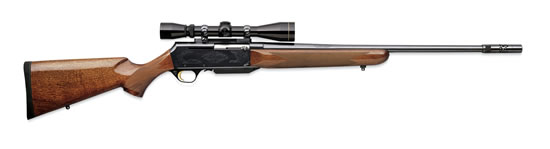
Being born and raised in Flint, and the victim of gun violence (father was murdered outside his work for 20+years over <$600) I always tell people Flint might be the murder capital of the world, but we aren't the random murder capitol of the world. For whatever its worth, its true.