I'm not especially smart, or happy, but, personally, I don't know how to be it, or what it feels like. I know pleasure, but being in a constant pleasurable state is not what is meant by happiness as far as I know.
Slavoj Žižek (someone who does seem to be especially smart):
“Happiness was never important. The problem is that we don't know what we really want. What makes us happy is not to get what we want. But to dream about it. Happiness is for opportunists. So I think that the only life of deep satisfaction is a life of eternal struggle, especially struggle with oneself. If you want to remain happy, just remain stupid. Authentic masters are never happy; happiness is a category of slaves.”
The 'eternal struggle' is such an interesting concept and I've thought about it a lot. It really does seem like, while true happiness may not solely come from overcoming challenges, if those challenges aren't present you definitely won't be happy. I think this aligns better than the top post's idea of "smart people see the awful things that can't be changed", it's moreso that smart people aren't finding satisfying challenges in the first place. I remember when I went wild downloading ROMs for games when I found out that was thing; once I ended up with all the games I wanted to play, I lost most of my interest to play any of them.
My headcanon is that it's tied to the fact that our life spans are limited and we've evolved to derive the most satisfaction when we're working on a task that is difficult for us individually or has vague success criteria, which seems to match up in part with the article's takeaway. It's also how I reason that not only fucking things up, but also complaining about it and trying to fix it are all required for people to feel happy. I see this ethos in a lot of old religions as well - humans striving towards the same qualities as a godhead but never quite getting there no matter how awesome their abilities become, or how our 'perfect' state was when we were ignorant of the consequences of our actions.
> Pleasure is not the right goal. Homeostasis, balance, equanimity, peace are much better.
Along with these, sustainability. Imagine finding balance and peace, but seeing clearly that the tools and techniques used to get and stay there are temporary. Pretty unsettling. We have to get there in ways that are long lasting and unlikely to change radically.
Appreciating and creating beauty isn't contingent on peace. Often art comes from a place of passion. I think freedom from emotional turmoil in the general sense would be enjoyed by everyone, I can agree in that capacity. However, that list of synonyms is rather ambiguous and to me elicits an imperative for impassivity, antithetical to striving towards anything. I guess it's a valid path if that suits your nature, but I'm getting more out of the human experience by evoking passions.
I'm just saying that comment I replied to makes this sound as universal truth. Wanting children and being happy about having children are subjective things. There are people who don't have children and are happy about it, people who have children but are unhappy about it and everything inbetween.
People who want to have children should have them, and people who don't want to have children shoudln't have them =)
Its not a mathematical problem that you just compare the curves, some problems are hard and cannot be generalized.
And you are adding other factors if you think people who do not want kids are somehow the outliers. Same as if people wanted kids might be if you actually looked closely, for most people its not a very well thought out choice.
I'm with you wrt everything you wrote, except this part:
> People who want to have children should have them, and people who don't want to have children shoudln't have them =)
I think it's fine either way! People who want to have children are often disappointed when it's not all roses as they imagined. Conversely, people who don't want to have children are often surprised at the little joys they bring...
Having kids is insanely stressful in the beginning. Your entire life shifts to revolve around them and its utterly exhausting. I could not manage having kids and maintaining friendships at the same time and lost most of my friends due to inaction on my part. As kids get older though for me ~10 years old, they begin to have a lot of autonomy. You see the results of all of your efforts and you realize that everything you have done has contributed to create these small awesome little people with their own thoughts and goals. I have not cried since I was a small child, even when close family died I just shrugged and trudged on. I am for the most part relatively unemotional. My kid came into my room the other day, just smiling and telling me about something and it was suddenly the proudest I have ever been, I almost cried in happiness. It was one of the most surreal things I have ever experienced. I am really looking forward to see what he does next in life and am actually happy about getting to find out.
And that's my fear when I get older (without kids). That the happiness of being single now and not dealing with kids and having more disposable income, etc. etc. will only go so far but that I'll be depressed about being lonely in the future when I am a senior.
I can definitely see how my siblings with kids will be way happier as grandparents.
But yeah, I'm content now without kids cause I get to sleep whenever and my disposable income is enough. lol
Also though, I'm never arrogant in making proclamations that people with kids are miserable.
They might have tough times in the beginning, but the older I get the more at peace they seem as parents.
For one thing, after your children have grown up and moved out, most people are really glad they've gone through parenting, have an adult child they are in relation with, potentially grandchildren to enrich their lives with etc.
To claim that having kids makes you happier in the long-term requires comparing against the control group of childless adults. Last I checked, there was no appreciable difference in happiness between these groups in middle age.
From the data I've seen, the strongest predictors of happiness are maintaining strong social ties. Children are only one way to do that. I've seen no data suggesting having children specifically is associated with more happiness at any stage of life.
Naval has a great definition which I agree with. Happiness Is Peace in Motion
Peace is happiness at rest https://nav.al/peace-motion
Another less liked person, haha is that Andrew Tate knob, and while for a knob, he does have some good ideas, one of them is something along the lines of, I dont need to be happy, I dont even think about it, as long as there are no problems, I am happy, if there are problems I am unhappy, unless I am unhappy, then I would say that I am happy.
There's a beautiful poem by Giovanni Pascoli, "Aléxandros" in which Alexander the Great gets to the Indus river with his army after having conquered half of Asia; he knows it's the end of his conquest and thinks - it was better when I was dreaming of it, I was happier when more challenges, road, destiny where ahead than behind.
James Clear talks about this in his book Atomic Habits. Basically people are happier during the _process_ of trying to accomplish some goal than when they actually accomplish that goal.
I am biased against Slavoj Žižek because I'm not very fond of him.
I disagree with happiness not being important. It is important, but it is not something that you can have all of the time, because human mood, emotional state and the experience itself is always a wave, going up and down, constant fluctuation. A person needs to learn to identify where in the curve they are and not allow the curve to rule their life. Once your able to be aware of the curve you can start taking steps to decrease the down trend of the curve so that you can spend more time in the up trend.
Humans notice change - diff, if you will. Meaning if you were to be in absolute happiness for extended period of time, your frame of reference would slowly fade and you would no longer know what is happiness for you.
That's why, it is my personal opinion, that you should just sit down, drink a hot beverage of choice, acknowledge the Yin-Yang nature of reality and choose happiness.
No curve goes up or down for ever. I'm not a financial adviser.
I can’t stand Zizek’s verbose nonsense. In this one paragraph he makes like 5 absurd statements one after the other, with such confidence and certainty that they look smart.
The closing sentiment takes the cake for me. A neat little shanty of the mindset of the communist smart men.
Not to mention that Zizek talking sounds like someone slurping ramen.
I understand the quotation (and only partially agree), but only because I've seen the same thing expressed much better, and without the absurd parts, in... the Unabomber manifesto. Basically, people need sensible difficulties to overcome.
I can guarantee, that trying to make someone else happy, will never ever fail to make you happy :). Even in the unlikely event you fail to make that person happy, the effort of trying is fulfilling. Now the problem is, most of us , myself included, forget to direct our efforts to making others happy. I imagine God up there like an exasperated parent : "If only you guys would actually listen to what I suggested, you know, loving each other and stuff, you would actually be happier. You know that? but instead you insist on being out for yourselves"
> I can guarantee, that trying to make someone else happy, will never ever fail to make you happy :
I can guarantee that there exist several data points that refute this.
Definitely can guarantee many cases where doing this to excess for some people is a net negative.
Can certainly show cases which led to divorce (i.e. always trying to make spouse happy was unstable, and the marriage would have been much better off with randomly ignoring spouse).
Helping others can make you happy. Just don't do it at the expense of self care.
I agree 100% with your last line ;). OK, my statement "trying to make someone else happy, will never ever fail to make you happy", perhaps needs a footnote such as "in moderation, obviously. does not include sacrificing your entire life for someone determined to remain unhappy or suffering from severe depression". Then again, its surprising even someone with depression who doesn't give a lot back, you can still go around thinking "well I tried" and your friends respect you, perhaps they emulate you. Good begets good, and all that. That's the idea of the pay it forward movement etc
What a great quote. I fully agree with the part that we don't actually know what we want most of the time. I have begun to ask myself exactly this question if I feel unhappy about something vague. Often I cannot really answer my own question.. or lose myself in if-then scenarios or plain uncertainty.
I guess my own realization is that there usually are many satisfying goals or outcomes and those change more often than you'd like. That's why "the path is the goal" is also a great quote.
There’s a point in getting the best with what you’ve got. But I know, sometimes we are served really crappy cards so unless that’s the case there’s no reason not to be happy. Comparing ourselves with others is quite often a major reason for unhappiness for many. Avoiding that is key
How long are you going to be unhappy about that? It’s passes even quicker than a cold and everybody gets it once in a while. Happiness is not to cry over spilled milk.


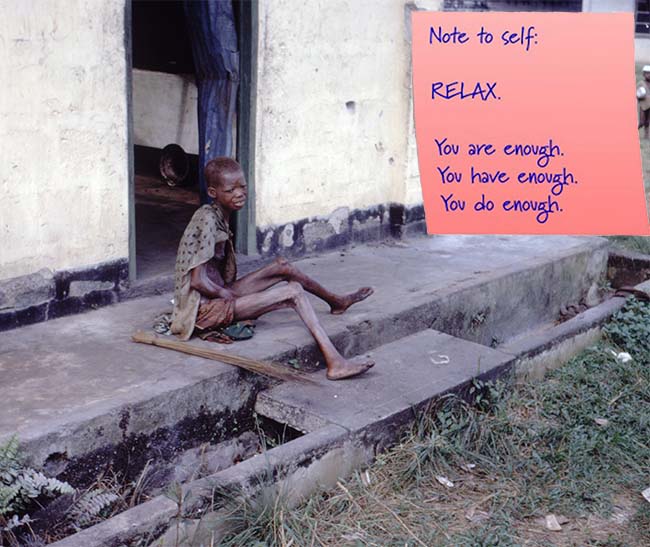
Slavoj Žižek (someone who does seem to be especially smart):
“Happiness was never important. The problem is that we don't know what we really want. What makes us happy is not to get what we want. But to dream about it. Happiness is for opportunists. So I think that the only life of deep satisfaction is a life of eternal struggle, especially struggle with oneself. If you want to remain happy, just remain stupid. Authentic masters are never happy; happiness is a category of slaves.”